Bonafide Farm

Note to self

March 7th, 2013 § 0

AnniePWeb

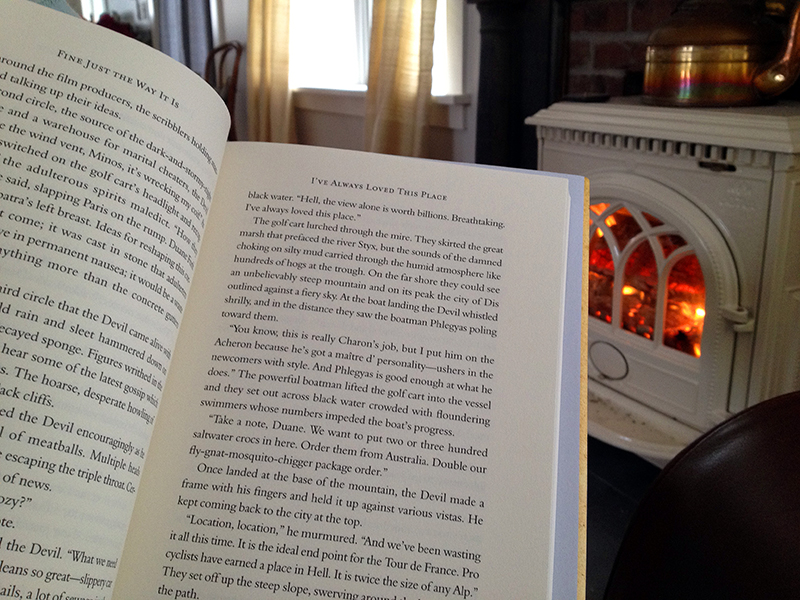
Don’t read Annie Proulx in front of the wood stove alone during a power outage while heavy snow blows horizontally outside the window and the wind screams down the chimney. YOU WILL FREAK YOURSELF OUT!

Instead, try Tina Fey’s “Bossypants.” Good for a unexpectedly feminist laugh and a reminder of 21st century luxuries like “30 Rock.” And, oh, t.v. And electricity.

And when you’ve read that straight through, continue on with a healthy dose of Joel Salatin’s “Folks, This Ain’t Normal.” Which will make you feel so wonderfully normal as you get up to fill your wood stove with wood you fed, named, petted, felled, split, stacked and carried in yourself.

P.S. Please do read Annie Proulx at any other time. She is just such a freaking badass in the way she lays down a story, and her writing thrills me in a way few others do.

Cardinal tale

March 5th, 2013 § 0

I came down from bed this morning to find a small male cardinal trapped on the back porch. He flew this way and that, banging his head into the glass walls with a trapped bird’s confused panic. I was afraid he’d kill himself, so I opened the door and tried to shoosh him out. That just made him bang even harder. So in one of his moments of postcollision confusion I tried to grab him with my bare hand. He squawked like a parrot, loud enough to bring my dog running from the field in front of the house. Each time my hand approached, the bird opened his surprisingly large orange beak wide enough to swallow a fingertip and threatened to do just that. I have been around enough birds to know to stay away from that sort of display, so I reckoned that I’d catch him up by his tail just like I do the chickens.

Cardinail Tail1AWeb

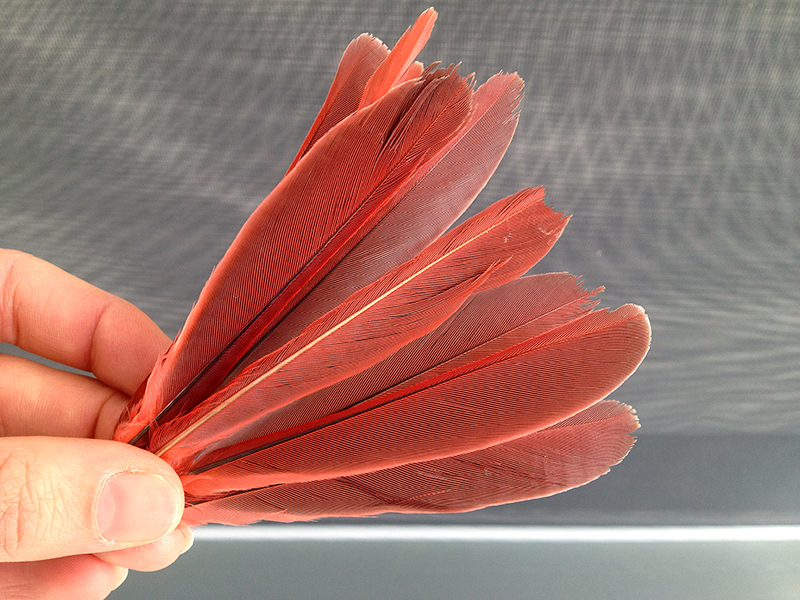
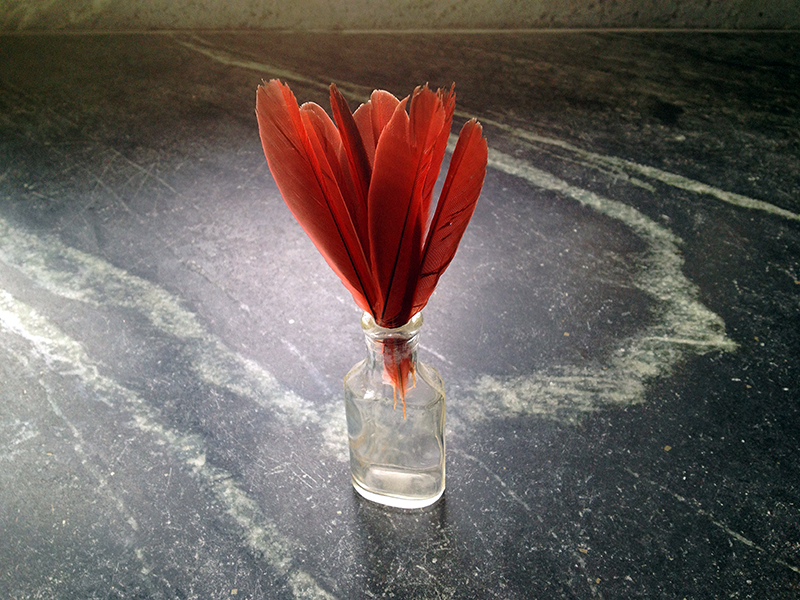
Well, when I grabbed the cardinal’s tail most of it came away in my hand as the bird shot through the open door and away to the forest. It’s a weird sensation to be left holding half of a speedily departed creature in your hand whist watching its other half take flight. Kind of like pinning a skink only to see it scuttle away, sacrificing the blue twitching tip of its tail.

I hope the cardinal can do okay without most of his tail feathers. But I guess it’s better that than a broken neck.

Cardinal Tail2AWeb

What happens when I forget

March 3rd, 2013 § 0

to take a soil sample for tomorrow’s master gardener class.

SoilTestWeb

As if my neighbors didn’t already think I was a freak, now I am outside at 10:00 p.m. in windy subfreezing weather, wearing boots and pajamas, working by lantern light to extract earthworms from shovelfuls of dirt destined for the Virginia Tech Soil Testing Lab.

Crazy, yes. But I suspect my teachers wouldn’t be too sympathetic if I claimed my dog ate my soil sample.

March 1

March 1st, 2013 § 0

IMG_1530AWeb

It’s flurrying under grey skies with peeks of patchy blue. Such appropriate weather to welcome March, which is what I consider to be the last winter month in Central Virginia. March is usually good for a snowstorm around here, though I don’t hold much hope as this winter has been a bust for snow lovers. I haven’t had to break out the snow shovel even once.

Red-winged blackbirds

February 28th, 2013 § 0

This morning a whole flock of male red-winged blackbirds spent a long time at the feeder in the oak tree. This is the first time I have recognized a group of them on the property, even though they’re one of the most abundant birds in North America. I took some photos with a long lens through the kitchen window and screen, thus their impressionistic quality.

IMG_1580Web

IMG_1559Web

IMG_1561Web

Diamond dog

February 27th, 2013 § 0

IMG_1485AWeb

Buck Mountain winter sunset

February 26th, 2013 § 0

IMG_1327AWeb

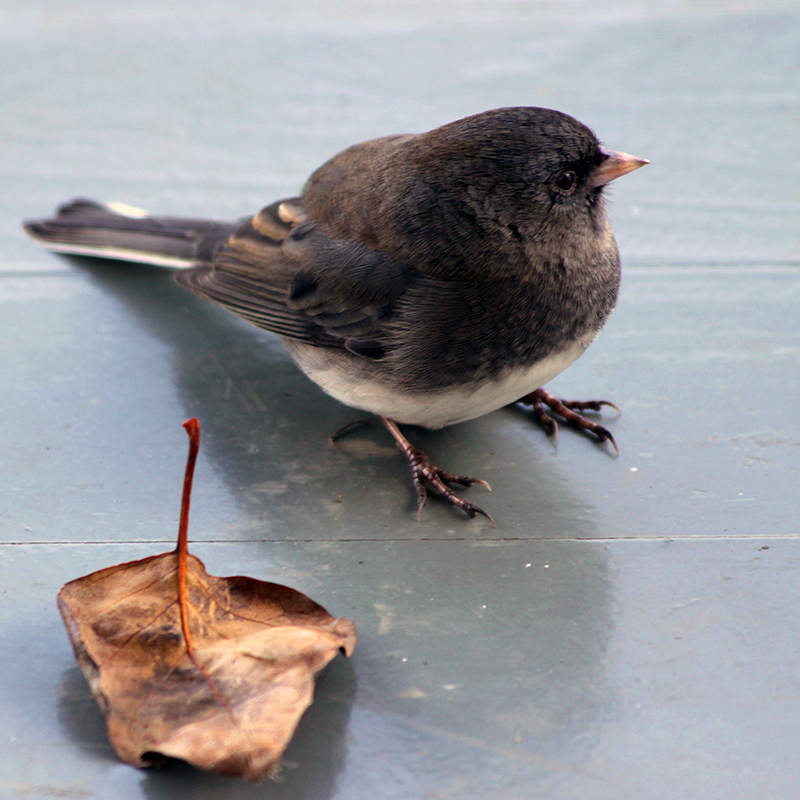
Junco

February 14th, 2013 § 0

IMG_1193AWeb

Delousing the flock

February 5th, 2013 § 2

One upside of attending to my Lavender Orpington’s wound on Sunday was that I discovered she had lice. And when I snagged Oregano, my barred olive egger, for inspection I saw that she too had a few creepy crawlies. It was time for an intervention.

With a healthy flock, regular dust bathing will keep most parasites at bay. But in winter, with its frozen or muddy ground, the birds aren’t able to dust bathe as much as in the warmer seasons. This gives lice a chance to populate the birds. If unchecked, these blood-sucking parasites will deplete a bird to the point where it dies.

Thankfully my flock was no where near that stage. Yet, after spending a night researching various treatments I decided to go straight for the chemical intervention and not waste my time with more “natural” or “organic” methods. I really wanted to nip this infestation in the bud, particularly as it’s still winter and the birds need all the energy they produce just to keep warm and regrow the feathers they’ve lost. And, in another few weeks (if I can get Iris to go broody again) I’d like to try hatching some eggs, which means all my birds should be as healthy as possible and louse-free to avoid passing the bugs on to more-vulnerable chicks.

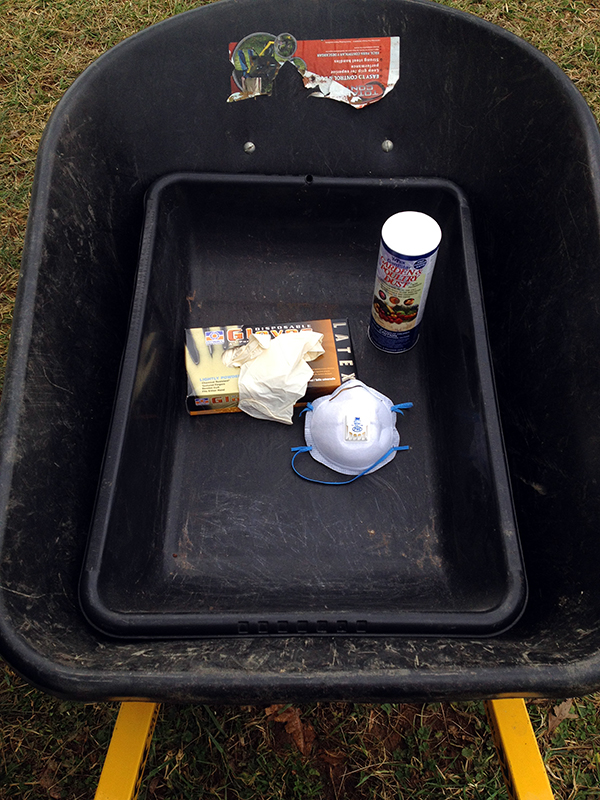
So I picked up a can of poultry dust, which is a permethrin-based formulation that you may have used for insects in your vegetable garden. I assembled my tools:

SuppliesWeb

I also suited up in latex gloves and a dust mask. Well, the gloves were a joke because it took just one kick of a captured chicken to shred them. I went through five pairs through this process and still ended up covered in dust. If you’re concerned about skin contact, I’d suggest heavier gloves for this job. And, really, with all the flapping and wind I ended up covered with this dust so if you are truly concerned it may not be the treatment for you to use.

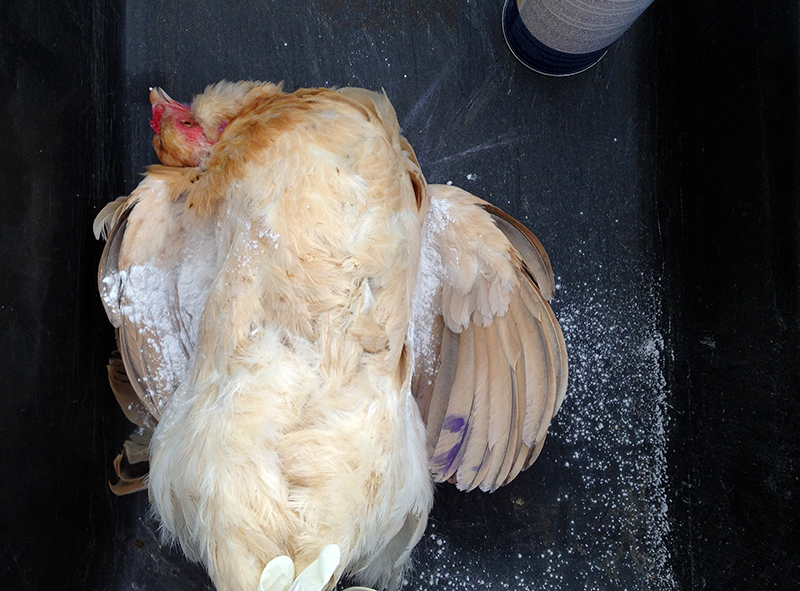
Cora, the Wheaten Ameraucana hen, was the first I caught in the coop. Following the advice of a YouTube video, I flipped her on her back. This seemed to calm her enough that I could powder under her wings, a favorite parasite hiding spot. I held her upside down to work the powder in to the feathers under her vent, which is where I saw the lice in all my birds.

CoraTubWeb

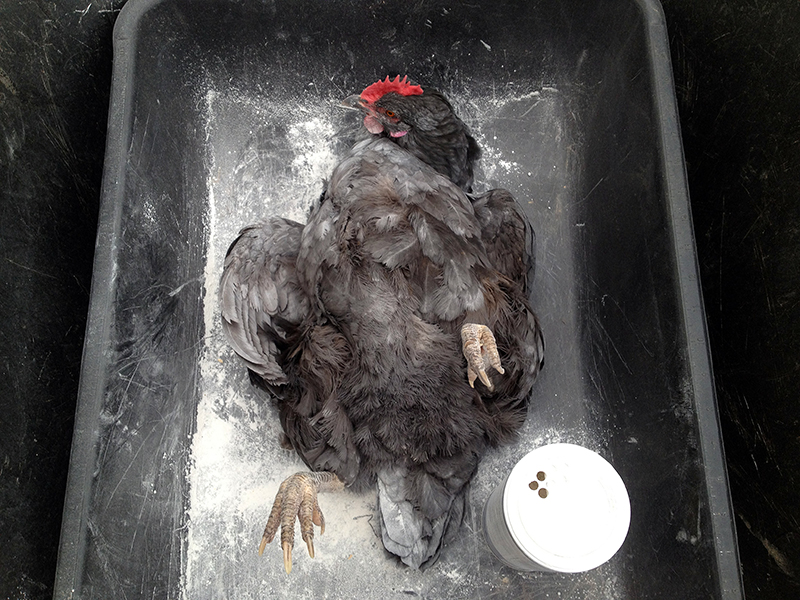
Lilac was up next.

LilacTubWeb

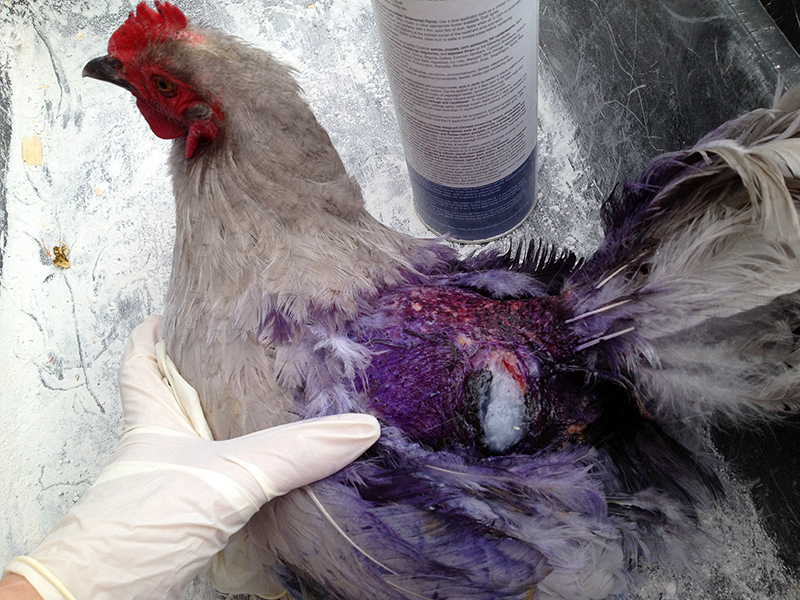
And so on through the flock. I left the injured Lavender until last so I could inspect her wound. It was open and bleeding, which I prefer to closed and infected, and seemed a tiny bit smaller than on Sunday.

LavenderWoundWeb

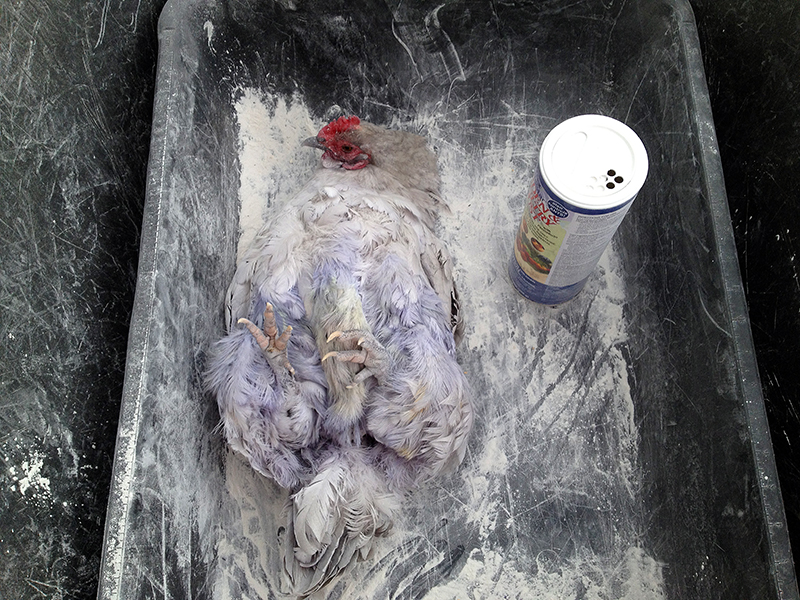
I packed it full of neosporin before dusting her.

LavenderDustWeb

Now that’s a Lavender Orpington!

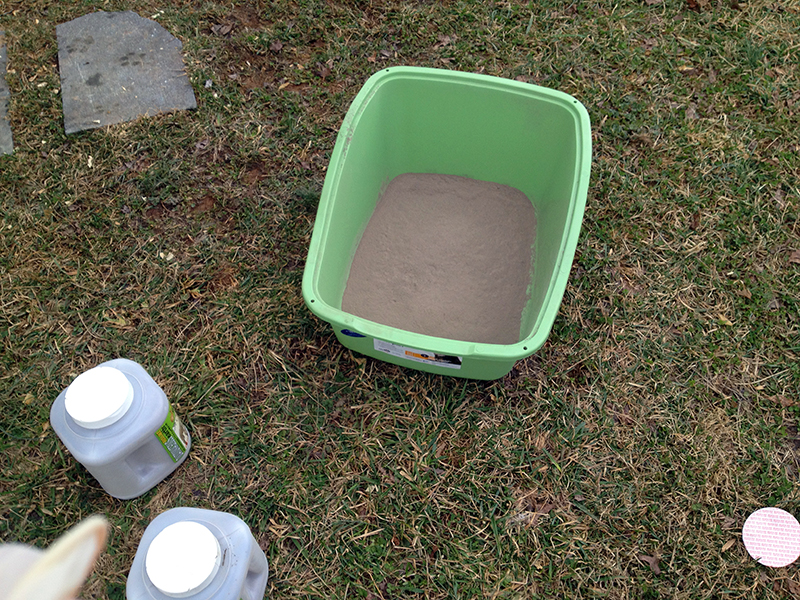
With the flock dusted, I did some housekeeping in the coop. I sprinkled food-grade diatomaceous earth in the nest boxes, in the chicken food, and filled a litter box with the stuff for dust-bathing in the coop. The diatomaceous earth, which is actually decomposed hard-shelled algae, acts in a mechanical manner (as opposed to chemical) on insects by slicing open their soft bodies, killing them.

TubWeb

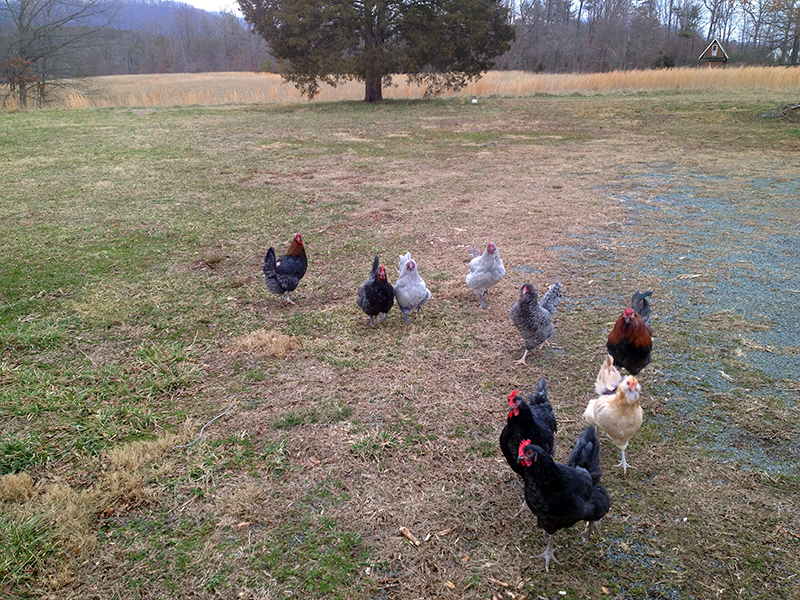
And with that the delousing procedure was complete. Now I get to look forward to ten days from now, when I repeat the powdering to kill any nits that will have hatched since today. Fun times!

FlockWeb

Tough decisions

February 3rd, 2013 § 0

If you are sickened by chicken wound pictures or first aid, this would be the post to skip.

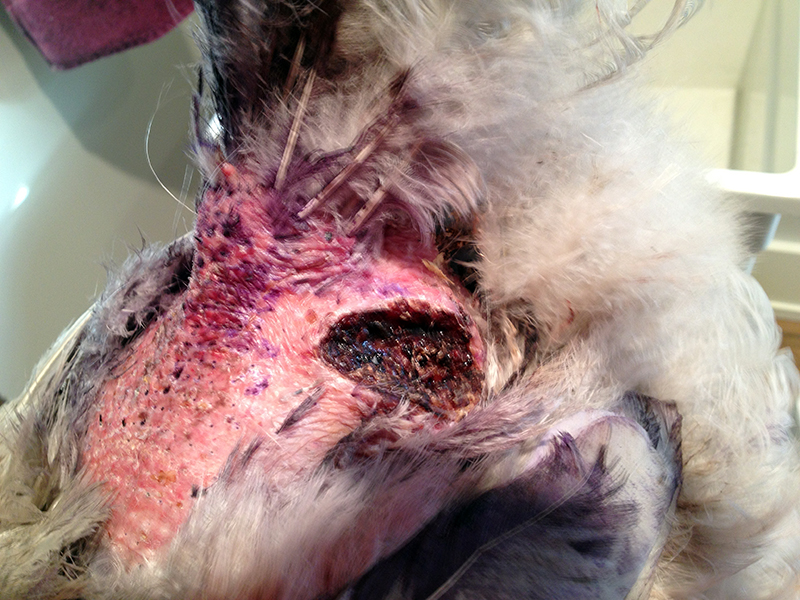
This morning as I let the chickens out to range, I grabbed my smaller Lavender Orpington hen as she came out of the coop. I’d knew she had a wound for at least a couple of months, and I’d been watching it. I suspect that without feathers to protect her back, courtesy of my feather-picking hen, my rooster had sliced the Lavender’s back with his claws when he mounted her. What had been a small black hole was now a wound the size of a golf ball, hidden behind her wing.
WoundWeb

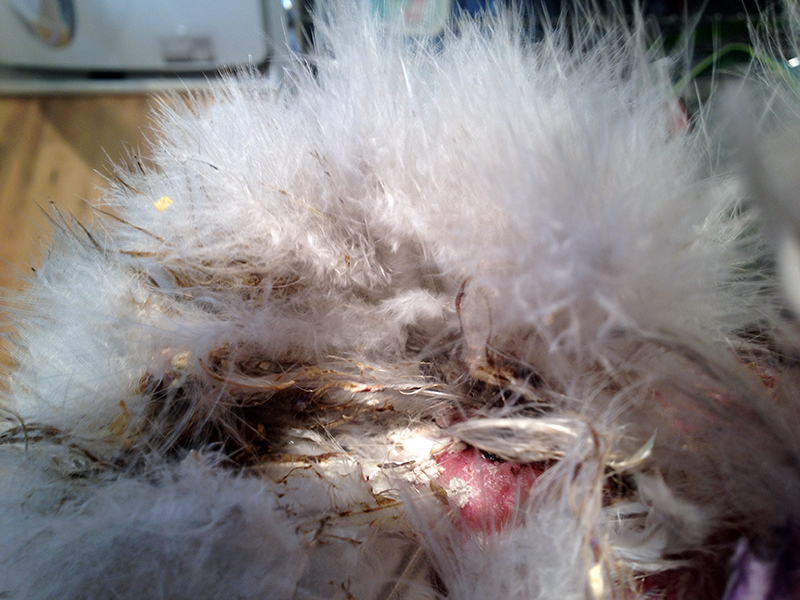
Today, for the first time, the wound smelled bad. And when I flipped the hen over, I found a messy bottom and some sort of infestation in the fluffy feathers under her vent.
LiceWeb

With her missing back feathers, purple Blu-Kote stains, a huge necrotic wound, and some sort of insect problem, this chick was a mess.

The evidence for culling her mounted as I considered her performance. This hen wasn’t a great layer, always depositing smallish eggs on the coop floor where they usually grew dirty enough that I fed them right to my dog. I’d made up my mind I didn’t want to continue to keep Lavender Orpingtons because I found their super-fluffy butt feathers to be always collecting poop and debris. And if she hadn’t managed to heal her back wound, did I really want to continue her genetics in my barnyard mix?

But what started as a snowy day had turned sunny, so I returned the hen to the flock for one last day of free ranging before I did the deed. And in the ensuing hours I thought about how I would. I had settled on beheading by branch lopper when I went out around noon to give the chickens the goodies in the compost bucket. When they saw me they all came running, including Dead Hen Walking. When I shook the compost around the garden, she was just as active as the other birds. I stood watching her for a long time, and when my feet finally grew too cold to stay outside any longer I had decided to put some effort into healing this bird.

With eight laying hens, two of which aren’t very stellar in their production rate, this Lavender’s dirty eggs represented a big percentage of my flock’s output. And I’d recently decided to free range my birds as much as possible, and thus some of her value lies in her insect control ability and manure production. Plus, I am fully expecting some predator loss during ranging. After considering the time and expense and food and care that I’ve put in to this bird since I got her in June, to get her grown and laying, it seemed foolish to cull her if she was still up and about and acting fine—even though the last thing I wanted to do was nurse another chicken.

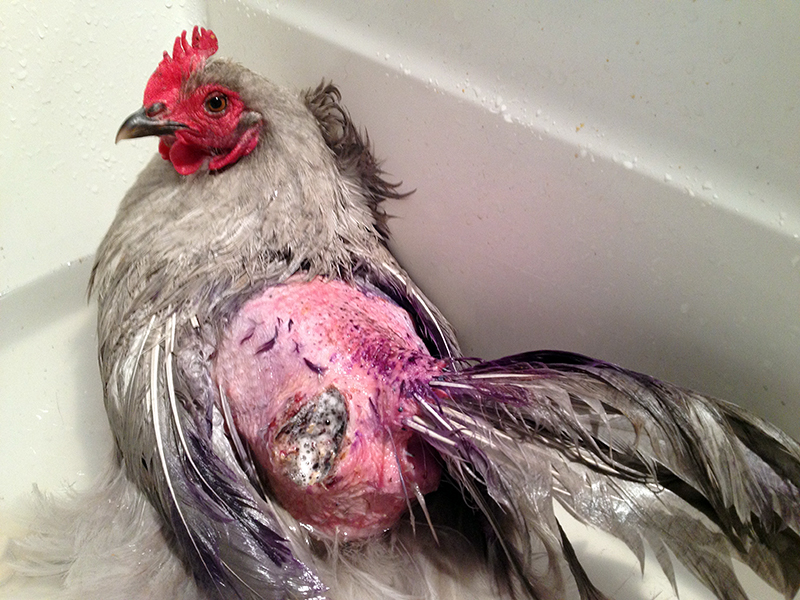
But nurse her I did. I caught her and brought her into the surgery, my laundry room sink. I filled her back wound with peroxide while I soaked her dirty bum feathers in warm water. I scrubbed her clean with dog shampoo and then used needle-nosed pliers to remove the feathers that were caked with the eggs sacs of what I later found out were chicken lice. Underneath her plucked feathers she looked very much like the start of a supermarket dinner. When her back wound had softened I scrubbed it out with a disinfected toothbrush, loosening the blackened tissue and rinsing it down the drain. Then I alternated rinsing peroxide and providone iodine in the wound.
PeroxideWeb

And through what must have been a horribly painful event, this blessed little hen put up nary a struggle. I’ve found my Lavender Orpingtons to be the sweetest, slowest, and most docile of all the breeds I keep, and her demeanor definitely showed through this treatment. She even seemed to enjoy the warm water soak.

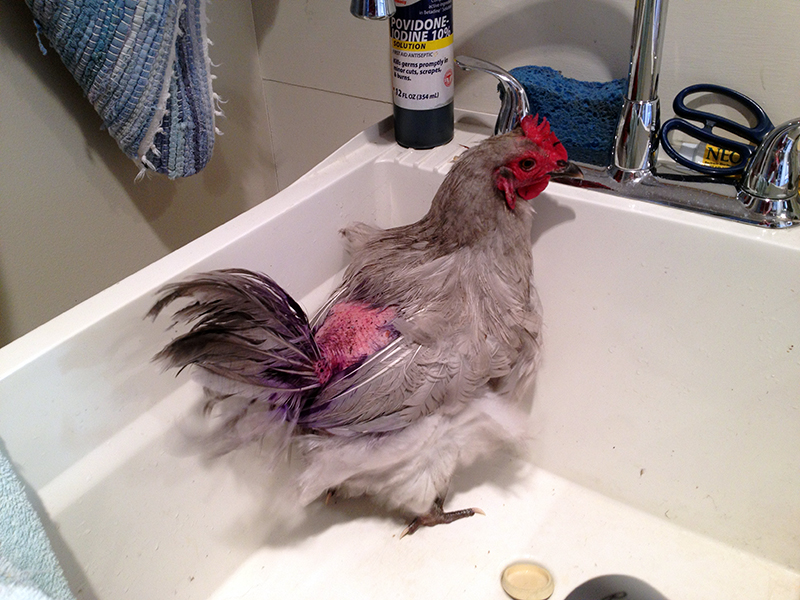
When I had her cleaned up as best as I could, I got the hair dryer and blew her dry. I didn’t want her to get chilled when I returned her to the coop, and she bore this treatment with good graces that none of my other pets possess.
DryerWeb

I worked on her until she began to smell of rotisserie, and then squirted even more iodine into her wound. Then I wrapped her in a towel and took her outside.

TowelChickenWeb

There she got a good spray of Blu-Kote to discourage her flock mates from pecking her bleeding, reddened skin. Then I released her into the coop. And within one second my rooster jumped on her back to mate. That kind of pissed me off, so I knocked him away and left them to their lives.

I don’t know if I will be able to get this hen’s back wound to heal, but I will keep trying. If Cora taught me anything it’s that chickens are incredibly resilient. Tomorrow I am going to get some diatomaceous earth and create a dusting box for the birds. Apparently chicken lice populations bloom in winter when the birds can’t dust bathe because of frozen or muddy ground. So I will start as conservatively as possible to treat the lice, keep an eye on the Lavender hen, continue allowing the birds out to free range as much as possible, and dream of spring.