Bonafide Farm

Early July vegetable garden tour: Part one

July 6th, 2013 § 0

We’ve had an unusual, for here, weather pattern during the last few weeks. It’s been raining almost every day, and the air is humid soup. All growing things look great, lush and happy to have all this moisture during a time when we are usually headed into summer drought. I haven’t had to water the garden once in at least a month, and most everything looks very good.

This year I am experimenting with letting some things go to seed. Chard, with its yellow feathery seedheads below, is a biennial. I planted these last year, overwintered them in pots, and now they’re in the garden working on setting seed. It’s a sacrifice to devote square footage to plants that are going to seed, but I am curious to see if I can begin to be less dependent on store-bought seed. I hope that certain things, most especially greens and lettuces, will start self-sowing in the garden, which means less for me to buy, plan and plant each year. And, once plants take control of their own growth cycles, instead of relying on a fallible gardener to tell them when to grow, they usually are much happier and healthier.
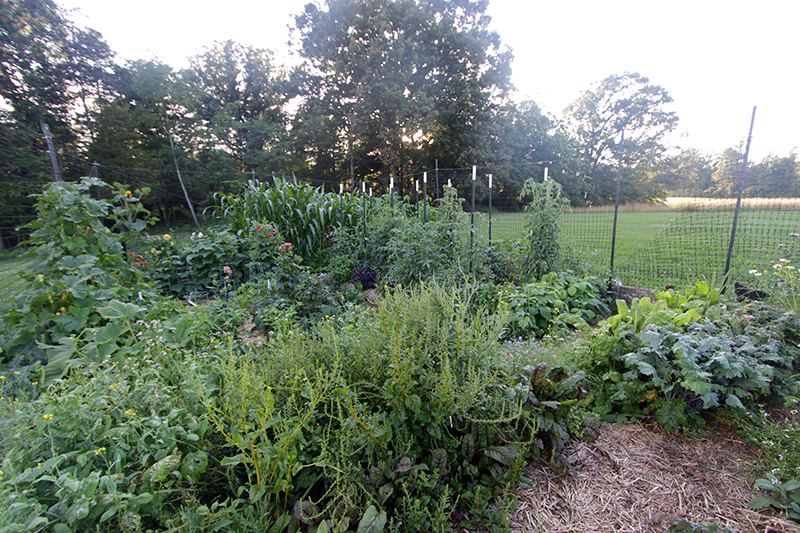
IMG_3506Web

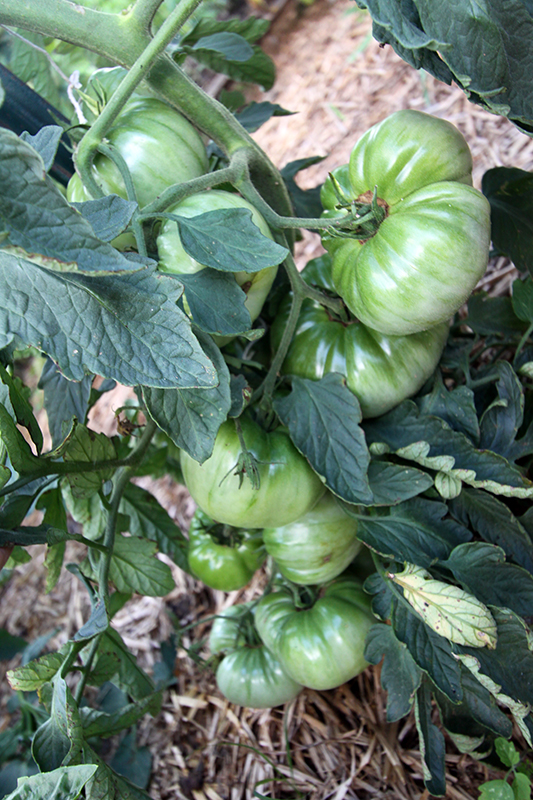
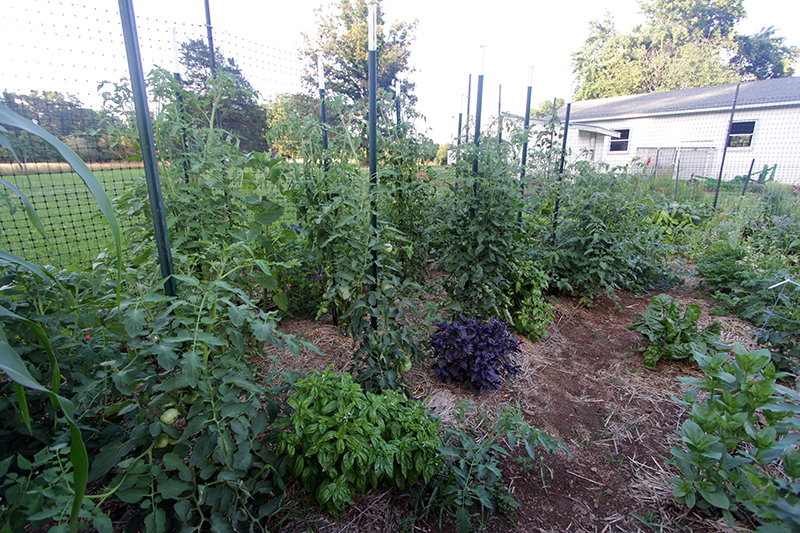
No Fourth of July ripe to tomatoes for me, but the plants are full of green fruit.
IMG_3521Web

IMG_3532Web

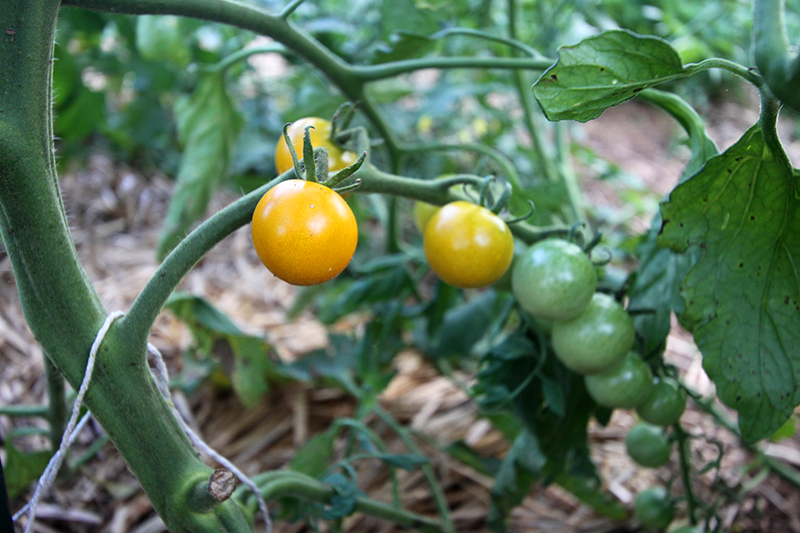
The Sun Sugar cherry tomatoes are just starting to ripen.
IMG_3546Web

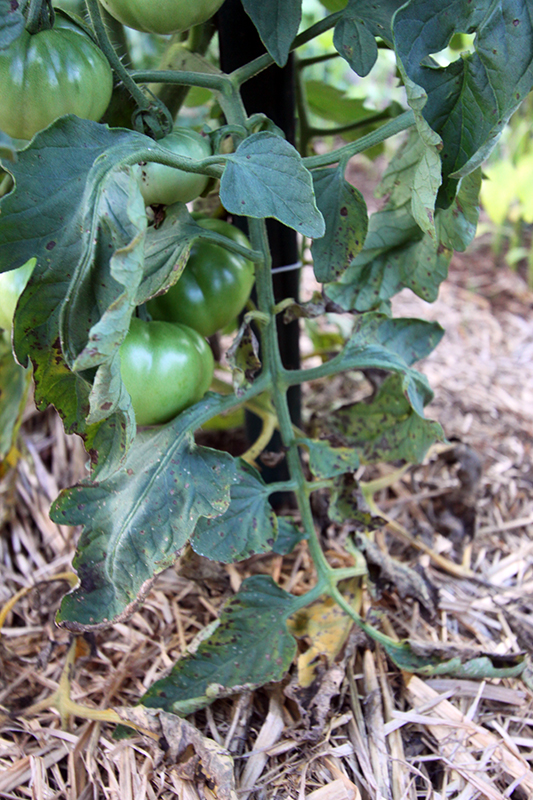
The only downside to all the rain is that it creates good conditions for diseases such a blight and fungus. You can see the beginnings of some blight at the base of this tomato in the yellowing, withered leaves with dark necrotic spots. Nothing to do but remove the affected leaves from the garden to help slow the spread. Some people use chemical sprays to control disease, but they’re an absolute last resort for me and I haven’t used them yet in this garden. Compared with some of my gardening friends, whose tomato plants are already halfway yellow, I am doing okay. I think my planting and mulching practices are paying off.
IMG_3523Web

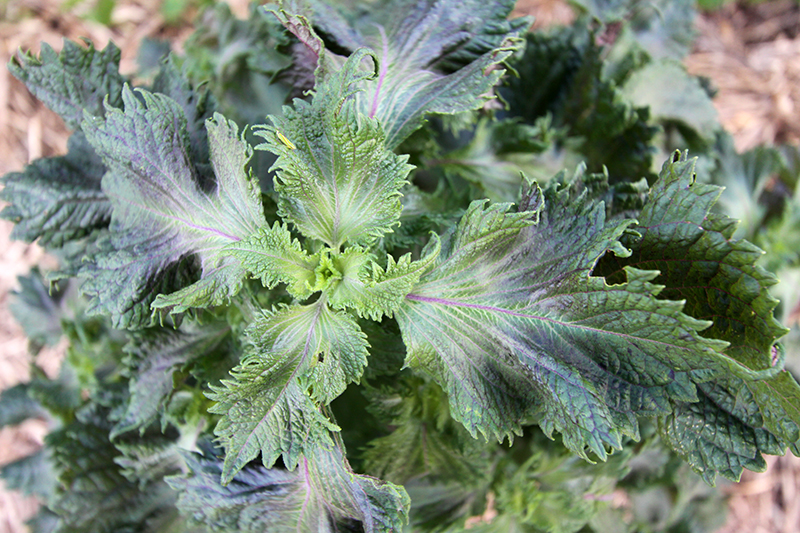
I ripped out the pea vines, which were done for the year, and planted some rattlesnake beans in their place to grow up the trellis. I have never grown these particular beans, but I hear they are pretty great. The big green plant to the right is a volunteer shiso, a wonderfully fragranced Asian culinary herb. I have no idea where the shiso came from—perhaps a neighbor—but it pops up all over my property. When I finally recognized what it was, I let it grow out everywhere as an ornamental.

IMG_3536Web

I think it’s a very beautiful plant that seems to glow from within with a spiritual energy, similar to borage. It’s used in Japanese cuisine for all sorts of things. For example, the red shiso is used to make umeboshi, or pickled plums.
IMG_3539Web

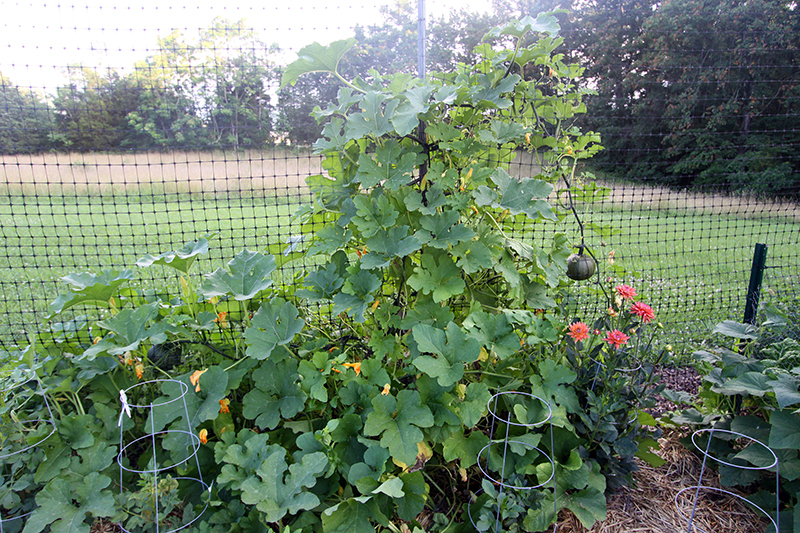
The volunteer vine that I thought was a squash turned out to be a pumpkin! Whoops! I had to cut this pumpkin off before it took down my fence. This plant may not be long for the world anyway as it appears the squash bugs have now discovered it.
IMG_3529Web

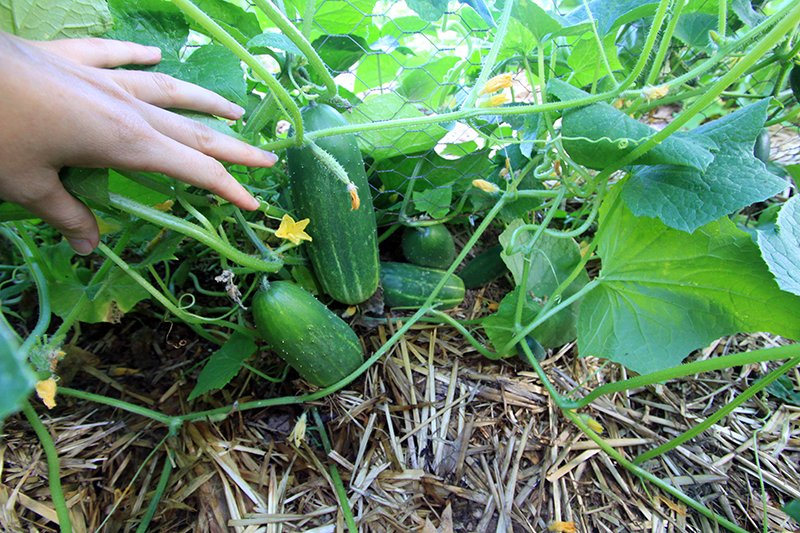
I am drowning in cucumbers. Which is kind of fun as I am on a quest to find the best refrigerator pickle recipe. Any suggestions?
IMG_3515Web

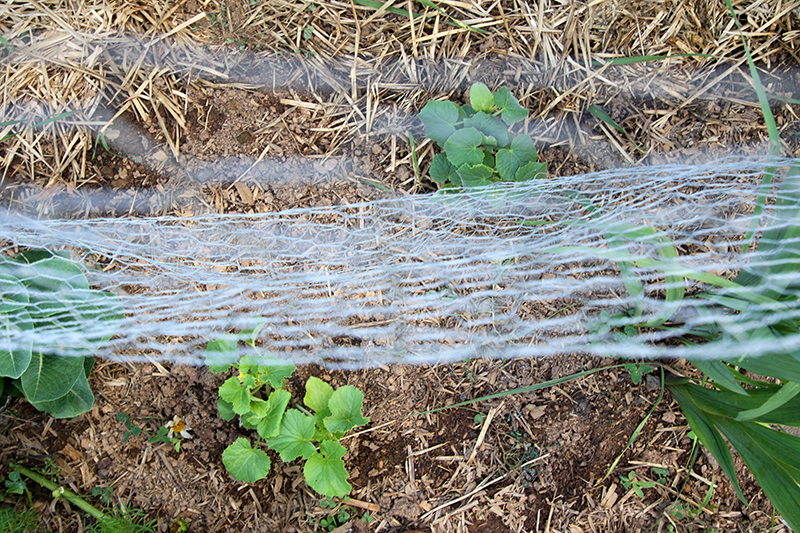
And, because it seems that cucumbers in my garden come on strong before petering out, I started a few more plants up the other former pea trellis. I planted some fun ones I haven’t grown before including an Armenian, lemon, and just another regular old bush cucumber for backup.
IMG_3549Web

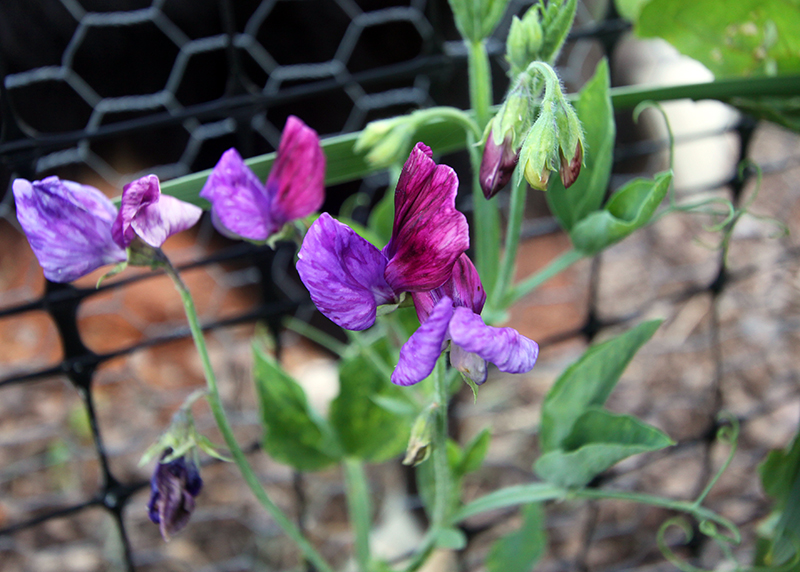
The only sweet peas to bloom from the dozens of started seeds. I think the trick to sweet peas is to plant them in the fall. Pretty pathetic. I will try that this year, as this is one flower I’d like to master.
IMG_3540Web

The Japanese beetles have arrived. They aren’t too bad yet, but maybe that’s because everyone I see gets a quick thumbnail through the thorax just before its tossed to a mob of chickens.
IMG_3537Web

Up next, part two of the early July vegetable garden tour…

Red-spotted purple

July 4th, 2013 § 0

I was walking with Tuck near here the other night and came across the most beautiful butterfly in the middle of a gravel road. It was one I didn’t recognize, which is always exciting.

BlueSpottedPurple

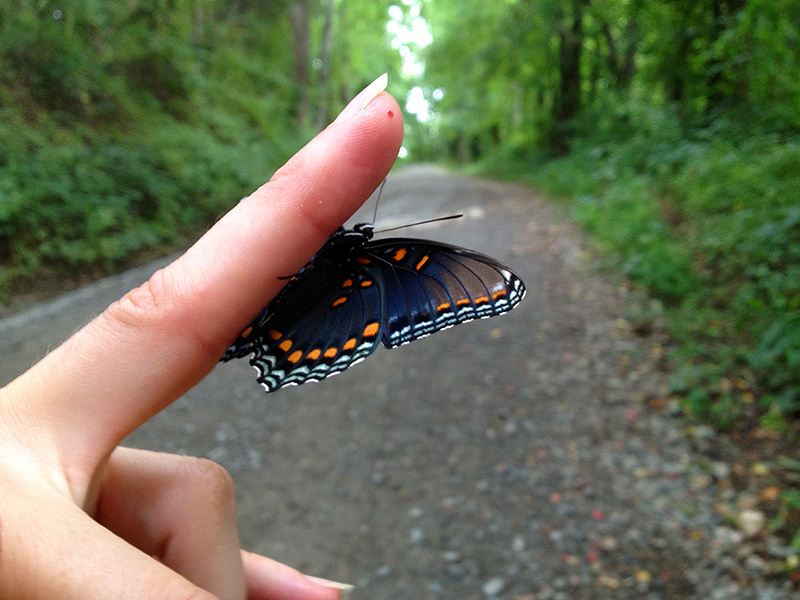
It was dark in the woods so this butterfly’s colors are hard to see, but it was the most amazing shade of navy blue fading into bright, iridescent turquoise. I’d never seen a live butterfly in this particular color. True blue (not purple-blue) is such a rare color in the natural world that it doesn’t seem real when one sees it.

I very gently coaxed it on my hand so I could move it off the road, and saw its underside was equally beautiful. Sorry for the unintentional flip off—that was the finger it chose!

BlueSpottedPurple2

After taking these shots so I could ID the butterfly later, I put it on the bank and went on my way, very, very happy to have seen for just a few minutes something of such incredible beauty on my evening walk.

The trip was made even more joyful when I flushed a few quail out of a hedgerow beside the road. This was wonderful to see as quail are really in trouble in Virginia. The Department of Inland Game and Fisheries reports, in their Northern Bobwhite Quail Action Plan for Virginia:

Populations of northern bobwhite quail and other bird species with related habitat requirements have experienced severe long-term declines in Virginia over the past 50 years. In colonial times, farming created habitats that began to favor quail. As land was cleared and farmed, quail populations flourished. For perhaps 200 years or more, quail were one of the most common birds of the rural Virginia landscape. During the first half of the 20th century, as a shift from a rural-farm to urban-industrial economy began, idled and abandoned farms continued to support quail populations. However, since then major land use changes have taken place. Virginia’s agricultural landscape became dominated by large, intensively managed crop fields, fescue pastures, and hayfields.

Total farmland acres declined. In 1900, approximately 80% of Virginia’s landscape was in open agricultural land. Today agricultural lands make up only 34% of our landscape. Many of the formerly open farm fields are now dominated by intensively managed pine forests. While cut-over timber lands still provide some early-succession cover, plant diversity is low and productivity for quail is poor. The loss of early succession habitat, particularly nesting cover and brood range, has been identified as the most significant factor limiting quail populations. The bobwhite is a legacy species in Virginia and their decline has led to concerns about ecological, economic, and recreational impacts throughout rural Virginia.

Anytime you can spot a threatened species in the wild is encouraging. It makes me glad to live in an area that’s still suitable to sustaining important wildlife biodiversity.

But back to butterflies…at home I got out my field guide and opened right to the page with this butterfly on it. Weird. Anyway, it is a red-spotted purple, which is supposedly common in this area though I have never come across one until now. Strange name, too, for a blue butterfly with orange spots!

And then yesterday I was walking in the house and saw a red-spotted purple flying in my flower garden. Now that I know what it is, it’s easy to identify by its more rounded lower wings that lack the extended hind wings that identify swallowtails, below:

lep_pipevine_swallowtail593

(Image source: http://www.edupic.net/lifecycle.htm)

And that’s your daily lepidoptery lesson, with a little quail digression!

Update on the broody hens: Candling the eggs

June 28th, 2013 § 2

Today marks the halfway point in the incubation of the chicken eggs. It’s been ten days since I placed them under the hens, and my most respected chicken resource states that eggs incubated under broodies usually hatch in twenty days instead of the 21 days for mechanically  incubated eggs. We shall see. As it is things aren’t looking awesome in the brood coops, and my confidence in the viability of these hatches is waning.

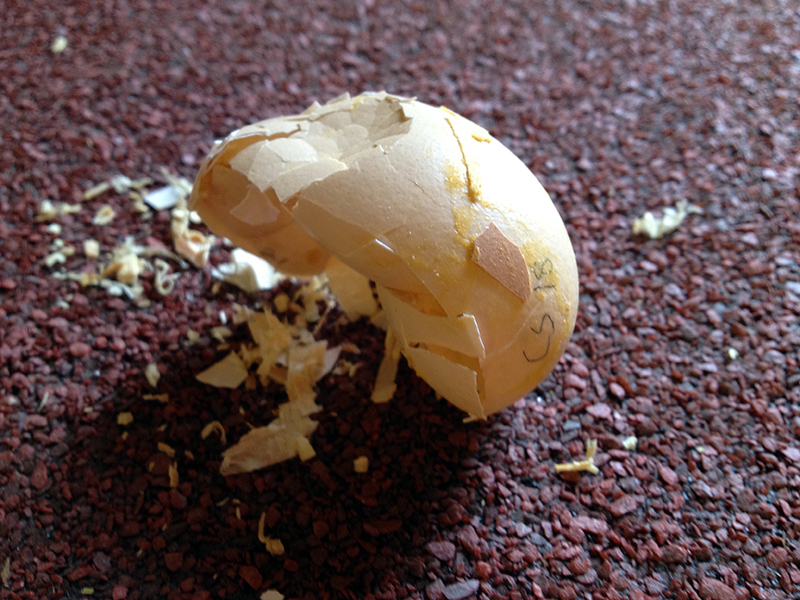
One of the eggs in Oregano’s coop was broken when I checked earlier in the week, and then yesterday I found the broken shell of a Coronation Sussex egg—the prettiest one of the bunch. Boo.

BrokenEggWeb

I don’t know if they are breaking on their own because they are rotten or if she’s cracking (and possibly eating) them. That nest box didn’t smell horribly of rotten egg, so I suspect the egg was fertile when broken. However, I don’t know how many days it would take under the hen for an infertile egg to spoil. So that’s the situation in Oregano’s coop. She’s been getting off the nest, as evidenced by her “deposits” in the cage, and has lost a lot of weight already. Broody hens generally don’t eat much while sitting, and if they do get off the nest their poo has such a strange and horrible smell that it’s enough to gag you just walking into a room with it. Needless to say I remove it as soon as it’s discovered, to keep flies off it and to get it out of my life and into the compost pile.

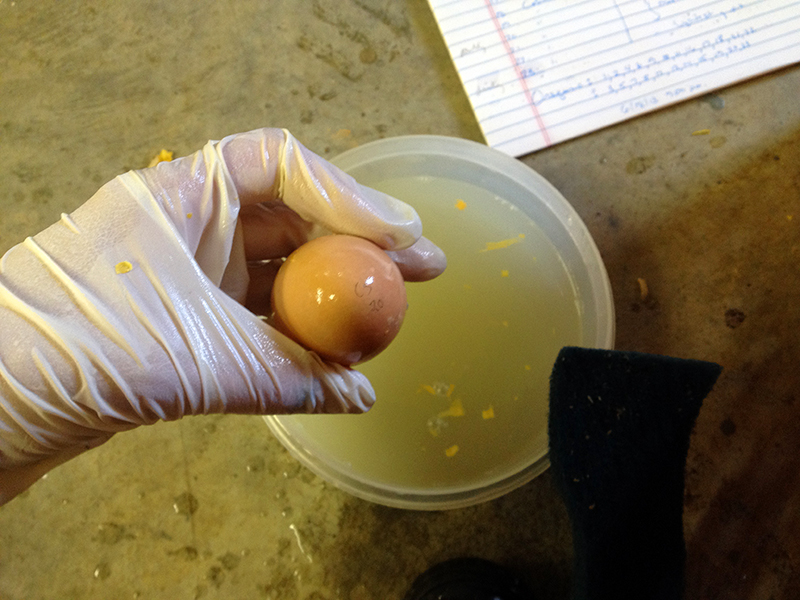
Over in Dahlia’s coop, I found a major mess in her nest box. One of the olive egger eggs placed under her was broken, and it had made a horrid fermented/cooked mess in the nest. At least five of the ten remaining eggs were coated in dried egg goo. Not good, for several reasons. The incubating egg is a living vessel, and its shell needs to be clean to allow air to pass in to the developing embryo. To seal the pores of the egg could suffocate the embryo.

I was at a loss as to what do. I know the embryos need air, but I also know that to wash an egg is to remove its “bloom” or protective covering that helps keep bacteria out of the egg. In this case, though, I figured washing was probably the lesser of two evil decisions, so I gently scrubbed the dried egg off the dirty eggs.

DirtyEggWeb

Oregano had a few dirty eggs too, so I touched those up as well, trying to just wash the dirtiest areas. Then I cleaned out Dahlia’s stinking messy nest, filling it with clean pine shavings. I made notes in my log of which eggs I washed, which may be telling around hatch day.

Of course I started this project before suiting up with gloves, and the stink that was on those eggs was so strong I couldn’t get it off my fingers all night despite multiple scrubbings and soaking in lemon juice. In all, it was a fittingly disgusting ending to an evening that began by killing a black widow in the crawlspace. Ugh.

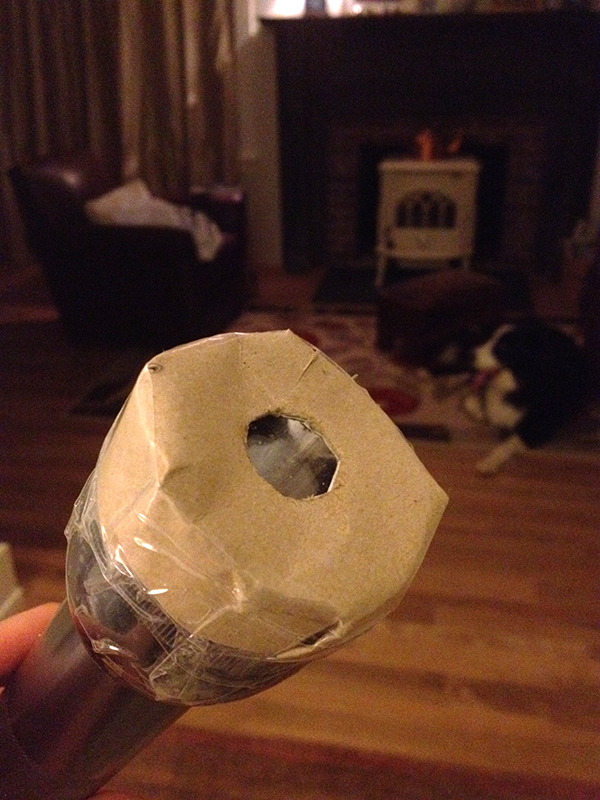
Tonight it was time to candle the eggs, which means I shine a light through them to see if they are developing into chicks. I made a candler out of a MagLight flashlight (with fresh batteries) topped by a taped-on piece of cardboard to concentrate the beam and cushion the eggs.

MagLightWeb

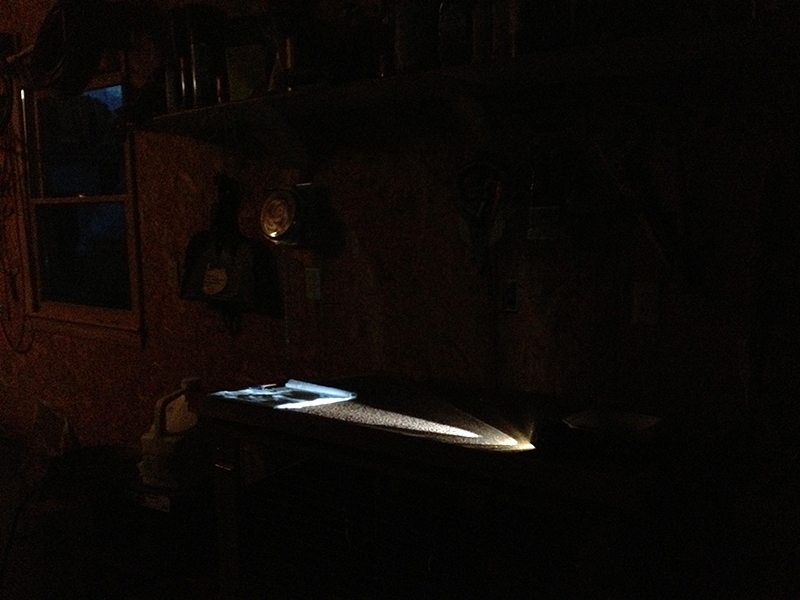
Then after dark I headed out to the garage to candle the eggs. All I needed was my candler, my record log and pencil, and a small dish to hold the eggs as I pulled them from the nest. I waited for the garage door lights to go off and began with Oregano’s eggs.

TheSetUpWeb

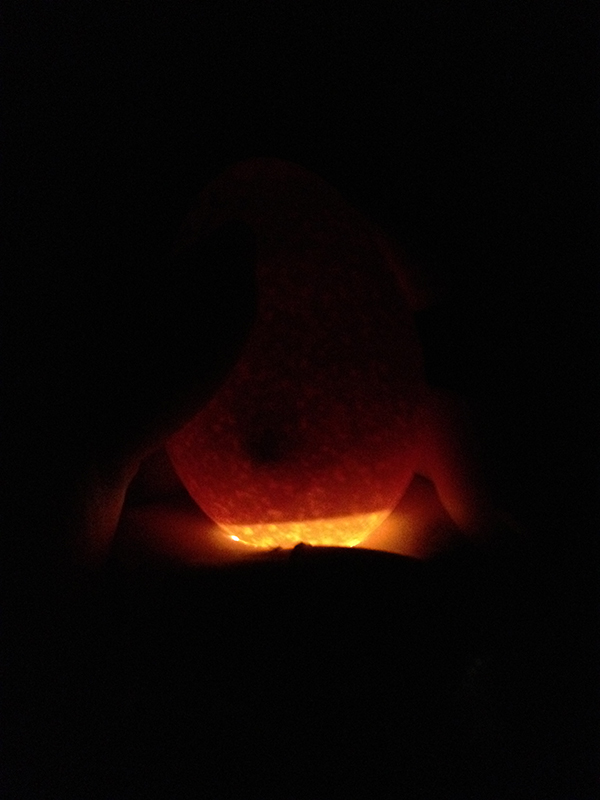
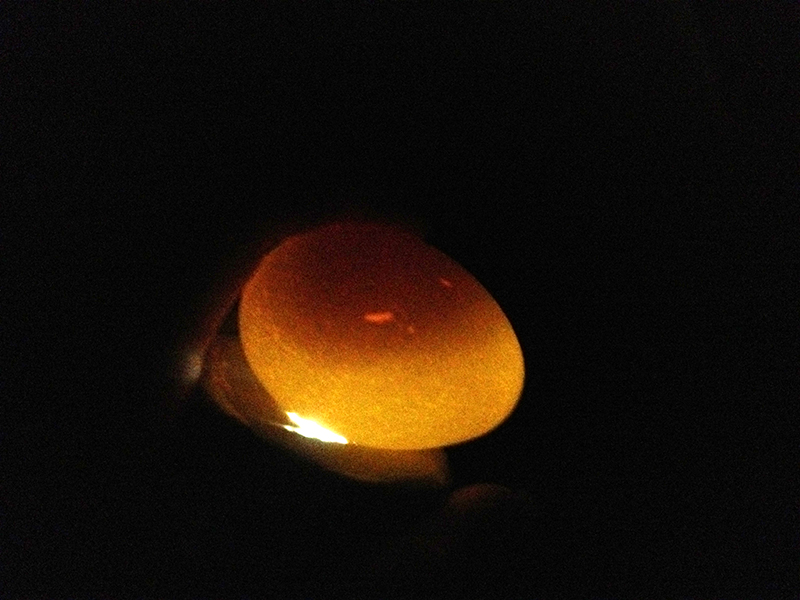
I removed each egg from under Oregano, enduring a peck on the wrist each time, bless her. I held the egg over the end of the candler, turning it until I could see something, or nothing. Most eggs looked like this, below, with some murky shape with no clearly defined blood vessels but perhaps the hint of a developing eye. Perhaps because many of them are Black Copper Marans eggs, which are dark to begin with and thus more difficult to candle.You can clearly see the air sack at the bottom of the egg.

SomethingWeb

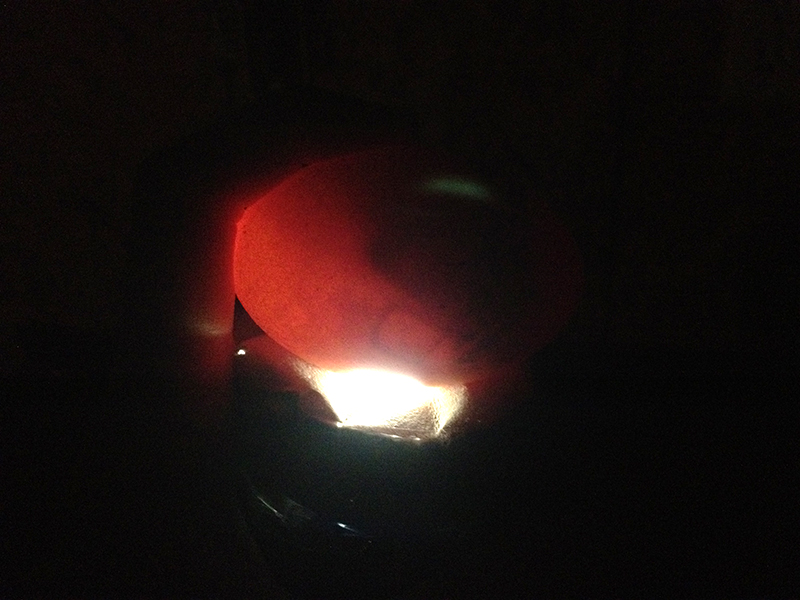
Here’s an egg in which you can see some veins and perhaps a developing eye, right on the line between shadow and light.

MoreSomethingWeb

Here’s an egg, unfortunately one of the two remaining olive egger (Oregano’s) eggs, that I think has no development:

NothingWeb

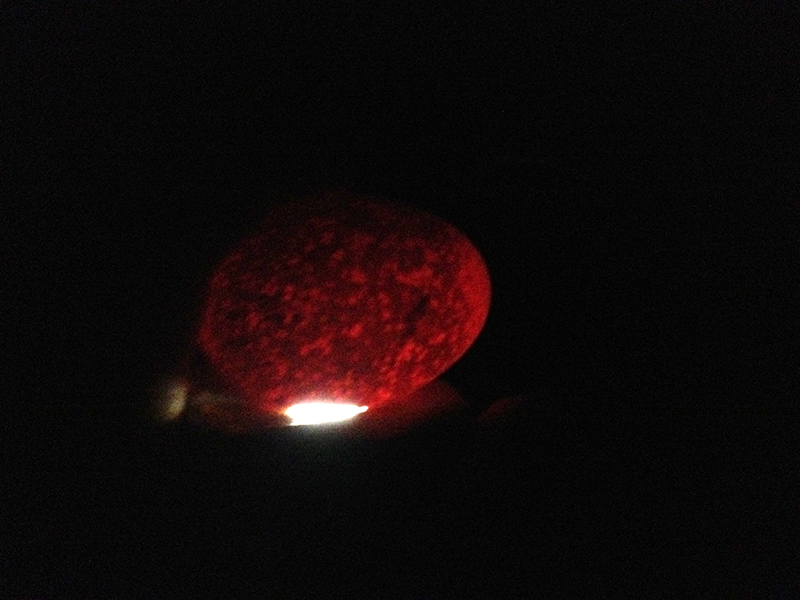
Here’s a Black Copper Marans egg that appeared very porous. This porosity is thought to be an indication of a poor egg for hatching.

PorousWeb

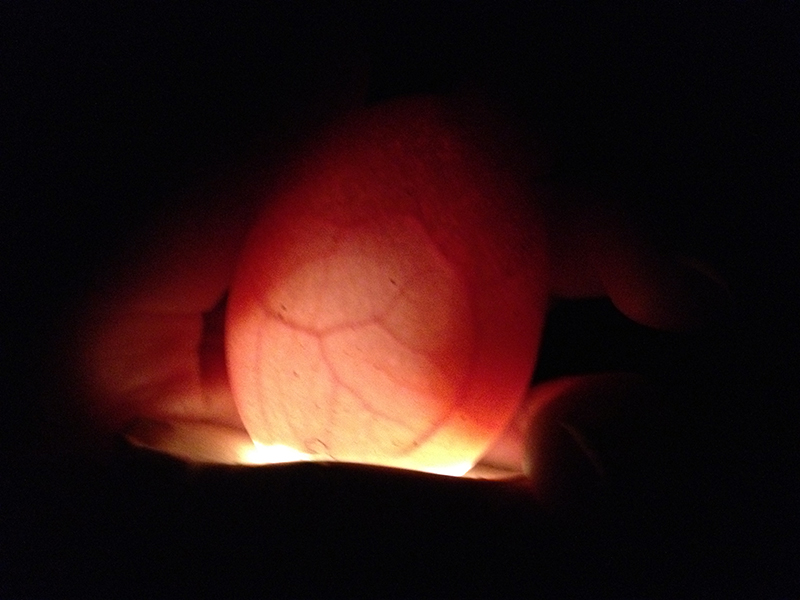
The clearest picture came from the last egg I candled, a Coronation Sussex under Dahlia. You can definitely see a healthy pattern of veins, and as I watched, I could even see the embryo moving within the shell.

CoronationSussexWeb

I have to admit that holding this egg in my hand, in the dark, and seeing those veins pulse is a pretty freaking incredible feeling. It’s scary, to hold such perfectly planned beauty alive within that fragile shell.

Out of the 20 remaining eggs, there is only one (the olive egger) that I feel I can conclusively describe as not developing. The rest are big question marks, and I am not yet experienced enough to discard any eggs based on my judgement. I feel better about the clutch under Dahlia, my Black Copper Marans, than the clutch under Oregano, my olive egger. But that’s just a hunch. So they will all stay put in the nest, and we will wait the ten more days to see what becomes of them. As you can already tell, a lot can happen in the next ten days. And so I remind myself, and you, dear reader: “Don’t count your chickens until they hatch.”

Defeating death with a butter knife: More joys of home maintenance

June 27th, 2013 § 7

I was vacuming near the laundry room today when I noticed a musty damp smell that I traced to the pocket door opening. I couldn’t figure out what it was until it suddenly hit me. I was smelling…summer crawlspace.

Which made me realize that it is that wonderful time of year when I get to enter the crawlspace and jiggle/threaten the dehumidifier into voiding into the sump pump tank instead of just filling up and turning off until I empty it of collected water. For three summers this dehumidifier has had a checkered past of sometimes behaving properly and draining on its own, and other times it just shuts off when filled with water, its red alert eye blinking in the dark. Meaning it’s not working as it should to help keep the crawlspace dry.

My crawlspace is supposedly conditioned space, which means that its air is maintained by my HVAC system just as the air is in my house. That, and a sump pump, work pretty well to keep things fresh and dry until summer sets in and the rain, heat and humidity gain the upper hand. Thus the supplemental dehumidifier.

I suited up in my usual home maintenance outfit of tall boots, work gloves, and a skirt, and opened the crawlspace door, flashlight in hand. Thanks to some hard labor with my dad, I have a really nice crawlspace entry. Every time I go in there I think of mixing and shoveling 1,000 pounds of concrete in a heat wave. Good times. At least this time I wasn’t chasing an angry black snake!

With my flashlight held out front like a sword, I took a deep breath and plunged across the threshold, wiping spider webs from my face. The crawlspace is deep enough that I don’t have to actually crawl—I can penguin walk most everywhere, ducking under ducts, trying not to touch anything. I made it to the dehumidifier, which as expected was sassing me with its “tank full” light.

IMG_3442Web

I took out its tank and dumped the collected water in the sump pump tank close by. Then I replaced the tank and the dehumidifier started right up. All good. Then I had a flash of insight whilst feeding the drain hose from the dehumidifier into the sump pump tank. I think the reason why it occasionally wasn’t working had to do with the the lower end of the hose not being low enough to create enough drop to drain. It’s a close call, I could tell that much. So I did my best to create the greatest possible distance between the dehumidifier outlet and the end of the drain hose, and sat back to sweep the crawlspace with my flashlight, checking to see that the mouse poison trays were still filled and whatnot.

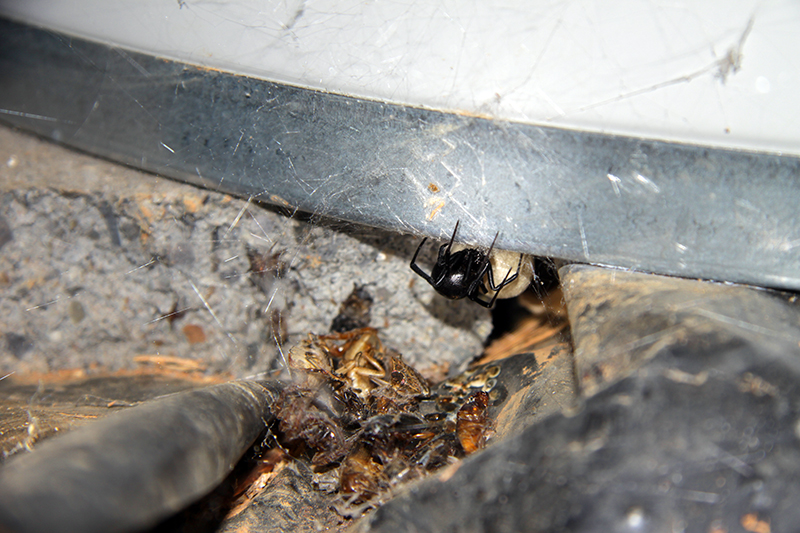
As the flashlight beam hit the bottom edge of one of my two water heaters, at left in the photo above, I saw an unmistakable dark shape. Growing up in the country you don’t need to see a red triangle to know a black widow. Once you learn it, her shape and inky gloss are unmistakable, and they trigger a dilute version of the feeling you get when surprised by a snake.

IMG_3462Web

Closer, but not too close, inspection revealed that this widow was a mama, and was guarding an egg sack. Great! Because what’s better than one black widow? Hundreds, of course!

Now let me just stop here to say that I know that spiders (and snakes too) are important cogs in the ecological wheel. They have great value, and I was impressed by the boneyard underneath Ms. Widow’s web—made up mostly of desiccated stink bug carcasses. However, I have value too, as do my pets and livestock, and I don’t want poisonous spiders or snakes living in, or even right next to, my house.

So I beat it out of the crawlspace to gather supplies. I grabbed a can of wasp spray, reading on the back that it kills scorpions. I knew scorpions are arachnids, just like spiders, so I figured it couldn’t hurt. Plus it’s one defensive tool that can be applied from a distance, in case the spider should run! Then in the kitchen I grabbed a butter knife, because it was the first thing I could think of that was about the shape and size I judged I’d need to fit in this little crevice.

Outside, the thought crossed my mind that there were other things I’d rather be doing than heading back into a dark crawlspace to go head to head with a venomous spider. But the idea of her living down there and hatching tons of babies was more frightening than that of war, so with the pockets of my skirt stuffed with my weapons of choice, I headed back into the crawlspace.

Ms. Widow didn’t put up much of a fight. Upon being jabbed with the butter knife, she did fall out of her web and attempt to scramble amongst the folds of the black plastic lining the crawlspace. It’s always a heart-quickening moment when an undead, pissed-off poisonous spider makes a break for it, especially when one is squatting in a skirt in a dark crawlspace with nothing but a flashlight beam and a butter knife for defense. But I had anticipated her flight, and was able to act fast to smear her into oblivion.

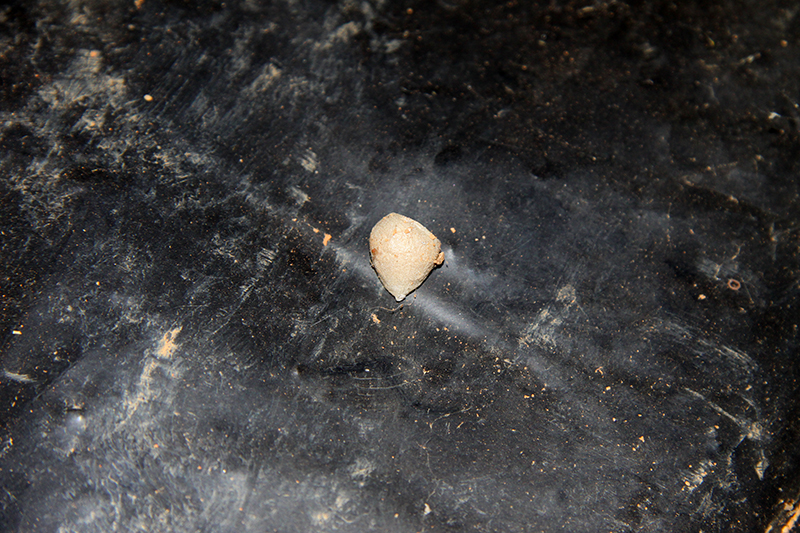
Then there remained her future progeny. I prized the egg sack out of the widow’s characteristically sticky web, and examined it by flashlight. It was about a half an inch long, shaped like a teardrop, and had a texture and color similar to that of a praying mantis egg case.

IMG_3464Web

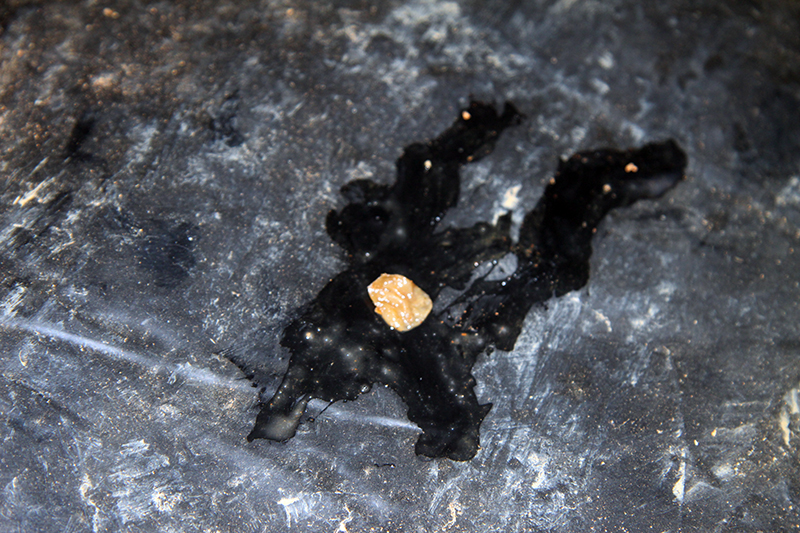
When I squashed it, it exuded a surprising amount of liquid and the case itself took on the appearance of a golden raisin. At least no baby black widows poured out, which I was kind of expecting.

IMG_3468Web

And with that done, I decided it was time to stop looking around the crawlspace. So, I scooted out, grateful to see this most pleasant sight waiting for me just outside the door.

IMG_3471Web

Even though he wasn’t in the trenches, sometimes it’s nice to know I am not entirely alone in all the stupid shit I get into around here.

And, silver lining. Turns out this little guy had fallen into the crawlspace pit with no way out:

IMG_3484Web

All because of a strange smell while vacuuming, I was able to pick him up, and send him safely on his way. (And not into Tucker’s maw, as this photo would suggest.)

IMG_3491Web

But not before he peed all over my hand. As toads will do.

Mid-June house garden tour

June 25th, 2013 § 4

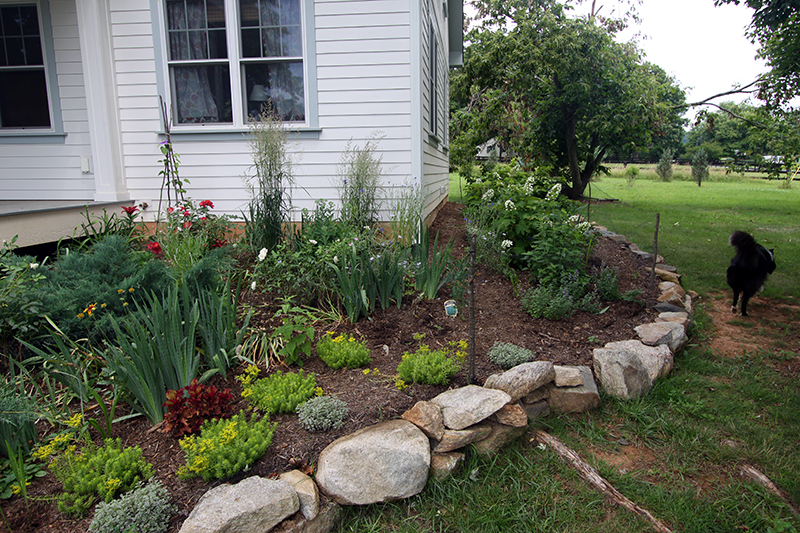
We’ve had a nice, relatively cool spring with lots of rain, and the gardens are happy. Here’s what’s been happening in the beds closest to the house in the last couple of weeks. Those huge Muppet-looking Scotch broom plants to the right are slated for removal as soon as I can get a backhoe to the house. I tried to dig them out by hand, but no luck. They grew way too large for their space, and though they have lovely blooms in the spring, they are taking up real estate that is too valuable for what they offer.

IMG_3143AWeb

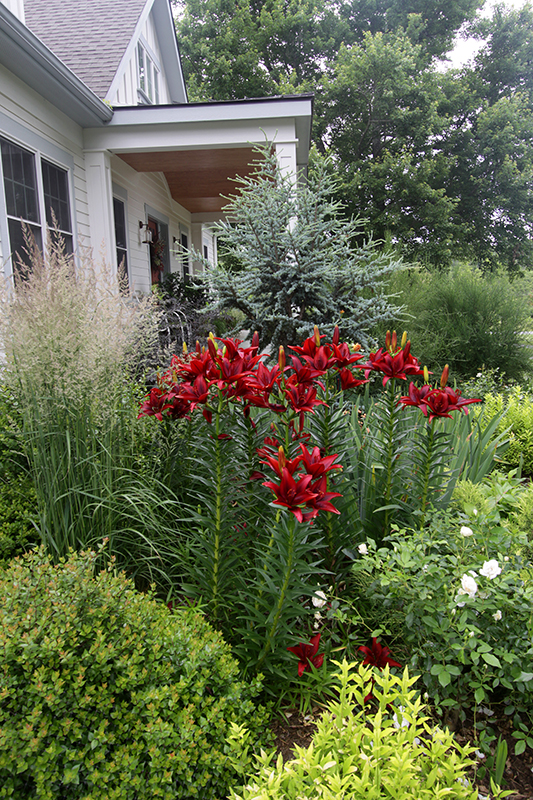
The purple irises of May have been succeeded by beautiful red lilies. This colony has grown from just a couple of bulbs, and I love their look and position in the garden. I am happy with this view, below, in June. I like the pop of color from the lilies, how they pick up the color of my front door, and how they nestle between the Blue Atlas Cedar and the ‘Karl Foerster ‘ reed grass. Iceberg roses bloom at the foot of the lilies, and the red of lily blooms picks up the blush tints in the albelia ‘Rose Creek’ (at bottom left). A lot of neat textures happening in this view, and good structure.

IMG_3116Web

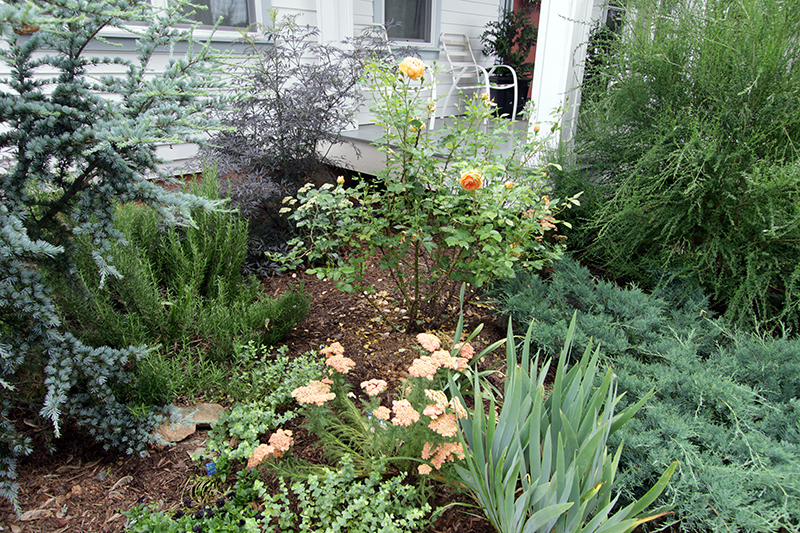
Moving across the front of the house, I also like this little view. Of course I love my ‘Pat Austin’ rose, which has brilliantly responded to a rather harsh 18″ pruning done in April. She’s blooming full steam ahead, but needed some company to make her peachy orange blooms less lonely. So I added a few yarrows: ‘Pineapple Mango,’ which has coral orange blooms, and ‘Anthea,’ a nice, antique-looking yellow. When they fill out they will lend some more visual weight to this orange/coral theme I have going in this area.

IMG_3119AWeb

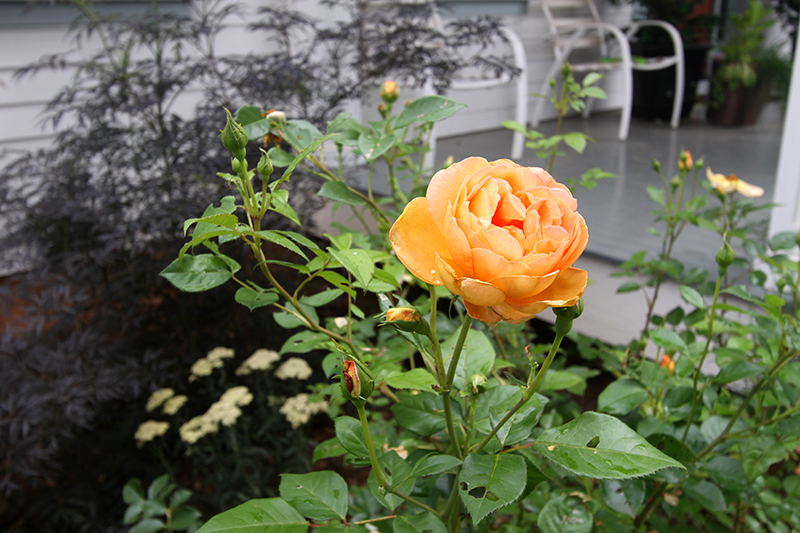
Here’s ‘Pat Austin’ again with the yellow yarrow in the background. I placed it right in front of my ‘Black Lace’ elderberry so that the blooms will really pop against the dark background. I like the way it wakes up the beautiful elderberry, which despite amazing color and foliage has a tendency to recede into shadow…the bane of most dark-foliaged plants.

IMG_3123AWeb

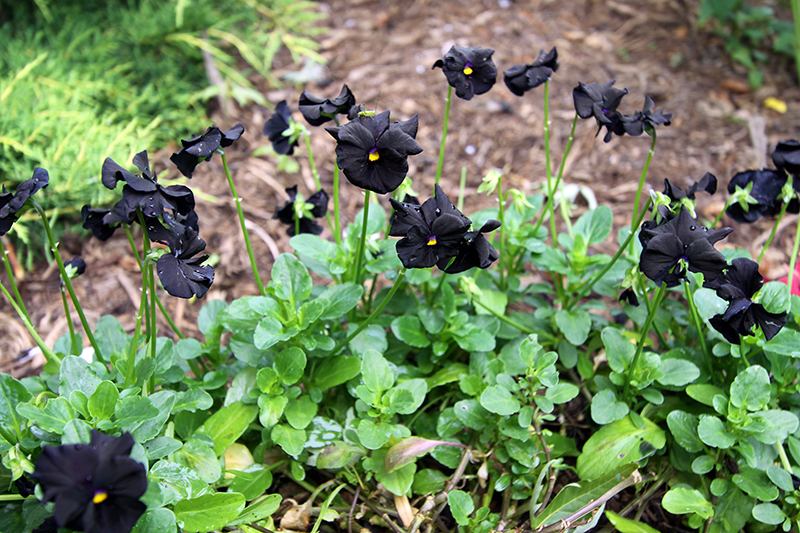
From dark foliage we move on the dark flowers. Black, in fact! True black flowers are pretty rare, so I was immediately smitten when I found this viola, ‘Black Out.’ There was hardly anything online about it, but I did read somewhere that it’s a 2013 introduction. And I found it, of all places, at a big-box store that starts with a “w.”

IMG_3126AWeb

Lots of people love pansies in the garden, but if you don’t mind their smaller blooms, violas are a better investment. Violas are perennials, pansies aren’t. Pansies give up the ghost as soon as it gets warm, and some violas will keep blooming through summer. And they self-seed. That said, there is still a place for pansies. I kept a container of beautiful pansies alive on my front porch from last fall all through this May. Despite being frozen into popsicles several times, they just kept flowering. To have outdoor blooms in deep winter is a real treat!

IMG_3237AWeb

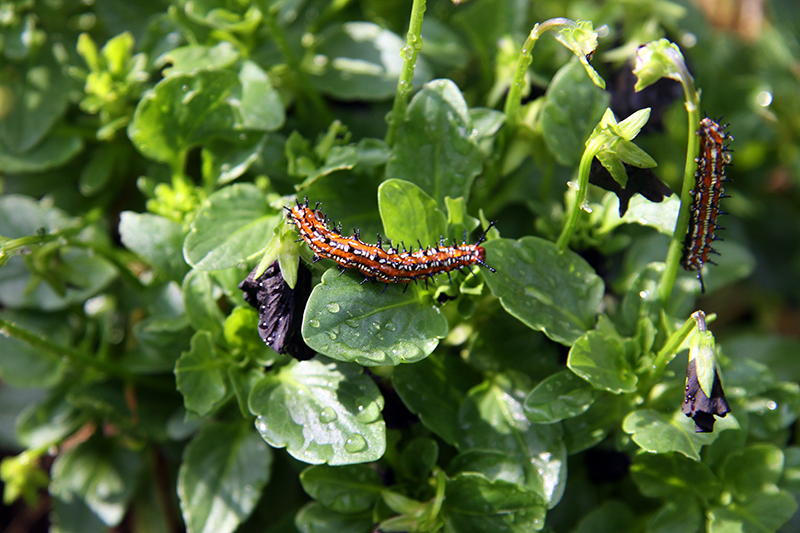
Just last week I noticed my new violas were crawling with these spikey orange and black caterpillars. They were gorgeous. I figured they were something special, instead of the usual destructive pest, so I left them alone. A quick internet search identified them as Variegated Fritillary (Euptoieta claudia) caterpillars. Turns out that violas are host plants for these beautiful butterflies—bonus!

IMG_3134AWeb

Over on the right side of the porch is my problem spot. This area lacks structure and needs a larger bush or small tree to anchor it. I have pulled out a couple of Iceberg roses from this area, to make a spot for said new addition. Now I just need to figure out what to put there.

I also have too much going on with the colors, so I am trying to edit that out to a coral/red/orange scheme to pick up some things on the left side of the house. That’s a tall order for someone who likes most all colors, but I will try.

IMG_3149AWeb

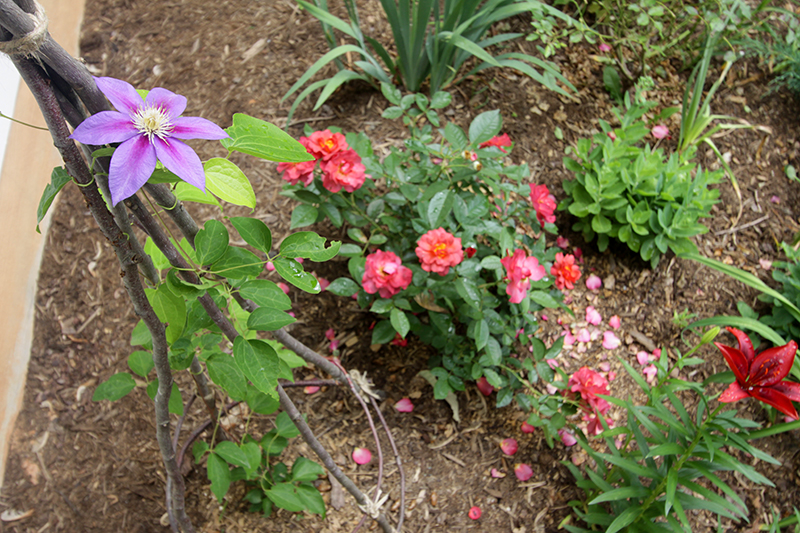
Above, a clematis climbs a homemade support, with a ‘Cinco de Mayo’ rose at its feet.

IMG_3138Web

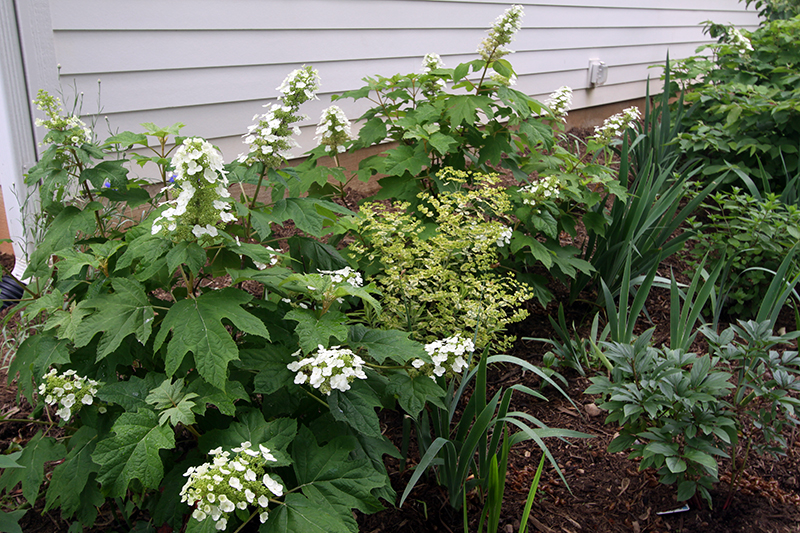
My oakleaf hydrangeas are growing nicely. The plan is that they will soften this front corner of the house with three-season interest. They’re one of my favorite plants, and I like how they look with the variegated euphorbia planted between them. May have to work that in somewhere else too.

IMG_3136Web

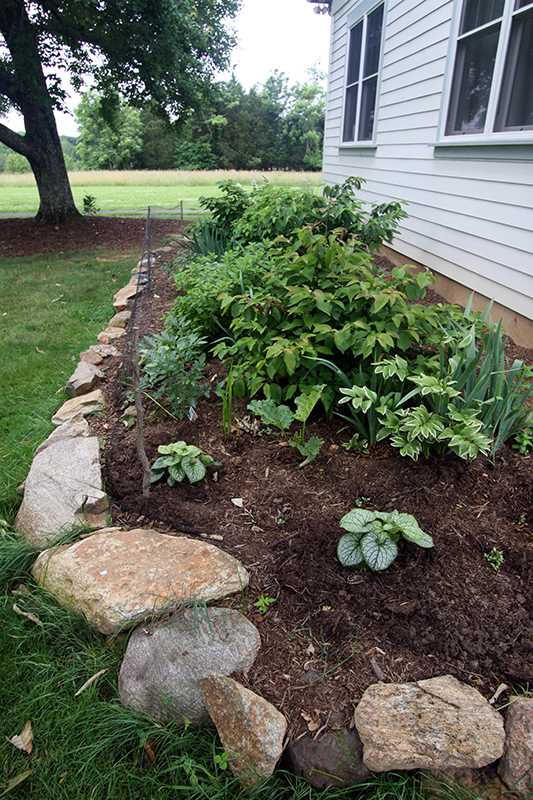
Finally, the newest section of garden. This is the side that runs along the east side of the house. In addition to a bunch of hydrangeas, I have viburnums, peonies, Solomon’s Seal, and some other random things in there. New additions are in the foreground, above, brunnera ‘Jack Frost.’ A totally gorgeous plant that since planting doesn’t seem too thrilled. Though it’s labeled for shade/part-shade, I think this side of the house really isn’t as shady as I originally thought it was! I hope these brunneras make it, as they are magical-looking and gorgeous, and they have small blue blooms in spring.

So that’s how the garden is shaping up as we head into summer. Now that it is three years old, I am really starting to see certain things fill in and to identify problems in other areas. As always, the garden is a work in progress and a learning experience. One can never be bored making a garden—it’s a lifetime aesthetic and intellectual challenge.

Supermoon

June 24th, 2013 § 0

IMG_3314Web

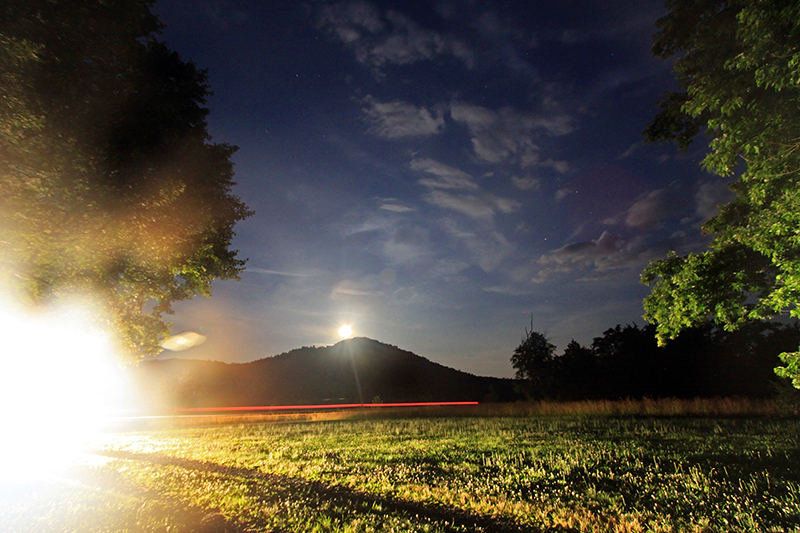
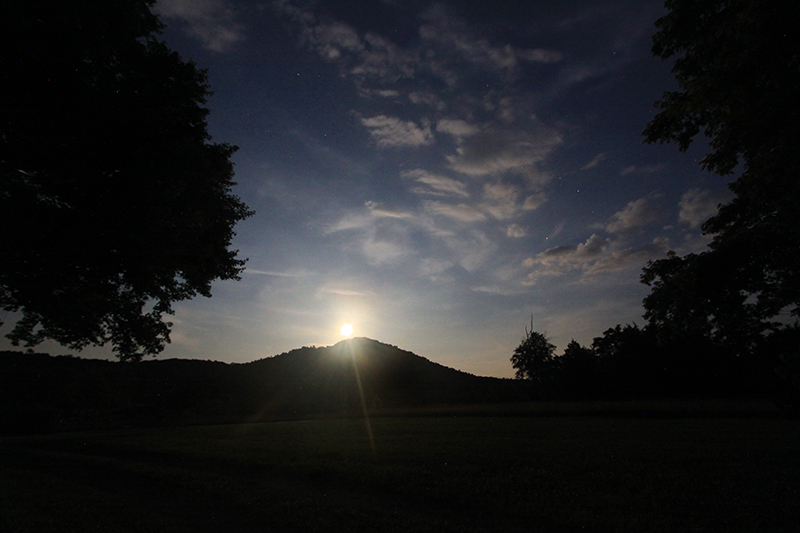
I was standing in the driveway in my pajamas around 10:00 p.m. last night taking photos of the supermoon rising over Buck Mountain. When I shoot at night I usually use the self timer on the camera to avoid any camera shake that would come from depressing the shutter button during long exposures. While the shutter was open a random car turned around in my driveway and I caught it on film…along with the supermoon.

IMG_3315AWeb

Happy Solstice!

June 21st, 2013 § 0

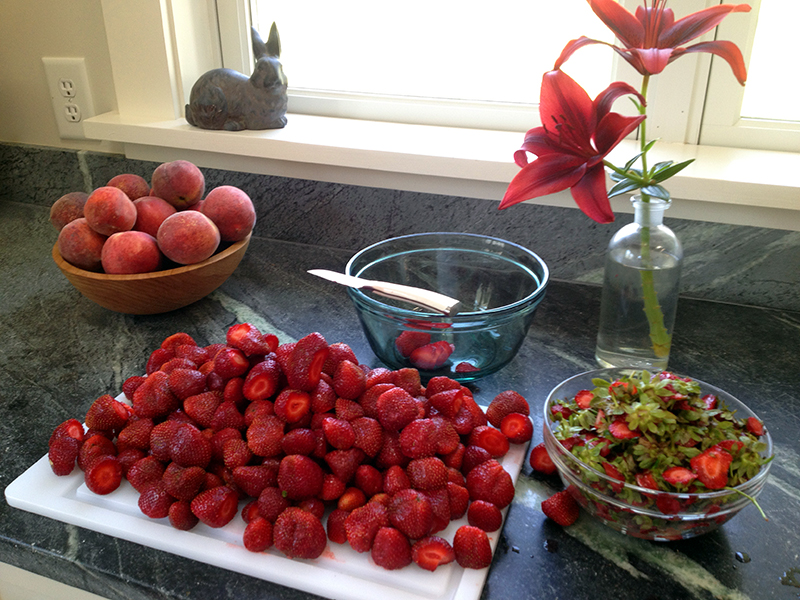
It’s the longest, lightest day of the year, and a lovely one at that. I spent the afternoon processing strawberries picked yesterday in Nelson County.

StrawberriesWeb

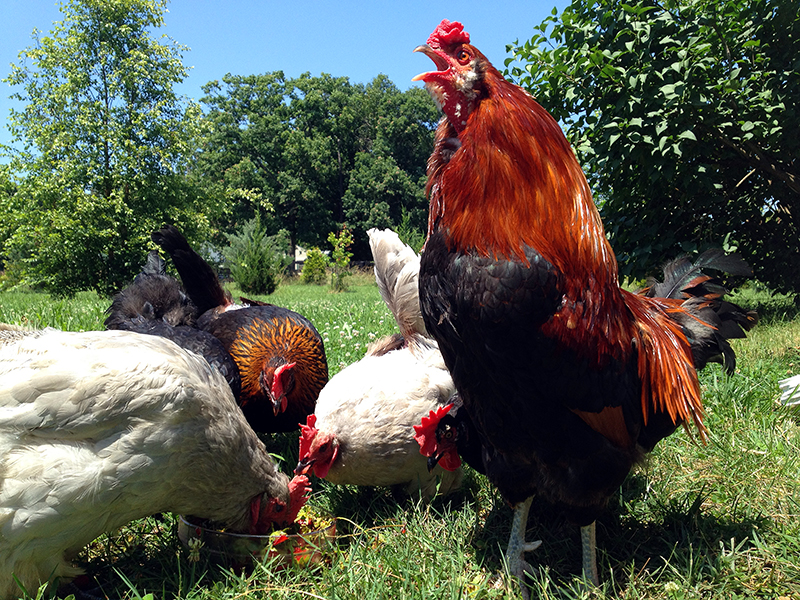
Summer fruits are the best, but you know what’s even better? Strawberry shortcake, baking in the oven right now. And the chickens definitely enjoyed the strawberry trimmings!

SolsticeCrowWeb

I’ve got a couple of growlers of Devil’s Backbone in the fridge and new friends on the way with fried chicken. We’re doing this Solstice up right with a good old-fashioned porch party on this beautiful evening.

Whatever you’re up to today, I hope you get a chance to celebrate the Solstice. And lest the sun hog all the astronomical attention, don’t forget to check out this weekend’s Supermoon!

Looking good in the garage

June 20th, 2013 § 1

Just want to report that both broody hens seem to have accepted their clutches. Despite dreaming Tuesday night that I awoke to find they had smashed all the eggs, everything was quiet when I opened the garage. Both hens are in the broody zombie state, and all looks good.

I forgot to mention a little ringer I threw into this project, just to keep it interesting. On Tuesday afternoon I met a lady at a gas station off Route 29 in Madison for a quick deal. She jumped out of a maroon minivan with a taped-over tail light as I pulled up behind the building. She handed me an egg carton containing six eggs, I forked over a $20, and lickety split, we separated and hit the road in different directions.

It was at its heart a true CraigsList deal. A few e-mails exchanged beforehand, a quick phone call, an arrangement to meet at a blessedly public place. My prize? Six Coronation Sussex hatching eggs.

Now, if you’re not familiar with the Coronation Sussex, allow me to introduce you:

CoronationsWeb

(Photo from BJs Poultry)

Pretty chickens, huh?

The eggs I bought supposedly come from Greenfire Farms lines, and you can read all about them and see more photos here. However, as with any CraigsList deal, you can never know. They could be store-bought eggs pulled from the fridge minutes before flying out the door. And, as with the purchase of any hatching eggs, one is never guaranteed a success. Don’t count your chickens…

Regardless of these known unknowns, I figured I’d give it a try. I’m not in the business of maintaining any fancy chicken bloodlines, so if I get a couple of pretty birds out of the deal that’s good enough for me!

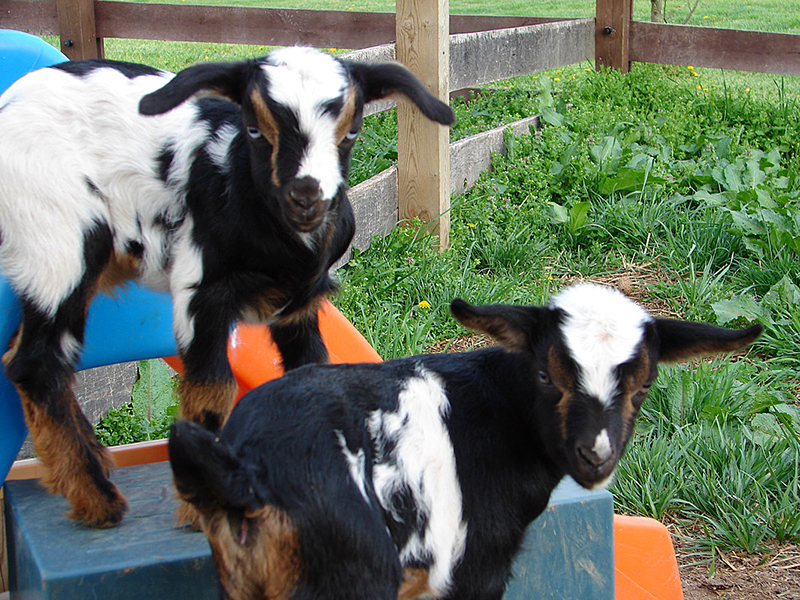
Oh, and a very exciting possible farm development is underway. On Saturday I am visiting a farm over the mountain to talk to a lady about some baby goats. To, you know…just…visit…

GoatsWeb

Stay tuned!

Welcome, DIYDiva readers

June 19th, 2013 § 8

I just want to take a second to welcome any new readers coming over from this post on DIYdiva. Kit wrote of Bonafide Farm as a “kindred farm,” which makes my heart happy as I feel the same way about Liberty House. Squee!!

And if you’re not yet familiar with DIYdiva, check it out pronto and see if you can keep yourself from being inspired. Kit’s a beast, a “power-tool wielding bad-ass,” and another awesome chick who’s living the farm dream on her terms alone. And best, she’s snort-out-loud funny as she describes her triumphs and travails. DIYdiva is a daily read, for sure!

Setting the eggs

June 18th, 2013 § 0

IMG_3257Web

There are just a few intimate acts that are on par with reaching, in the dark, beneath a broody hen’s body, into the damp heat of her defeathered breast, feeling for eggs that pulse with embroynic blood. My years of developing film and photographs in the darkroom served me well as I navigated by feel alone. Oregano gave me a few good pecks on the wrist, bless her defensive spirit, and Dahlia let loose with a series of low perturbed squawks as I mussed about beneath her.

I took Oregano’s sacrifical eggs from her and and placed them in an old cardboard box grabbed off the garage floor, stretching as I did through the sticky web of a mother spider guarding her egg sac.

And then I replaced the stolen neverbabies with twelve fresh eggs for Oregano and eleven for Dahlia, of all colors and shapes, with a prayer for the suspended lives within.

And the 21-day countdown begins toward life or no life. It all comes down to the proper application of heat and humidity. Amazing, every time.