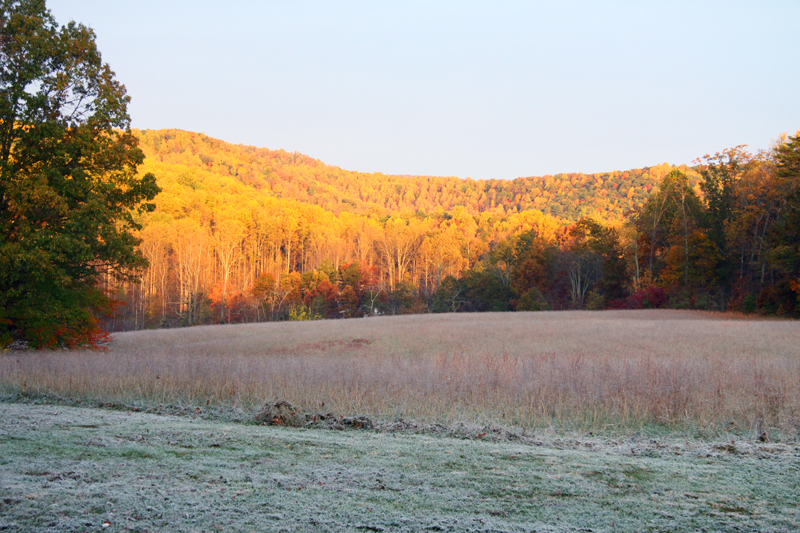
Is known as the Cold Moon. Which was appropriate as it coincided with a cold spell that left the frost unmelted on the North side of the house for two days straight.


December 13th, 2011 § 0
December 9th, 2011 § 0
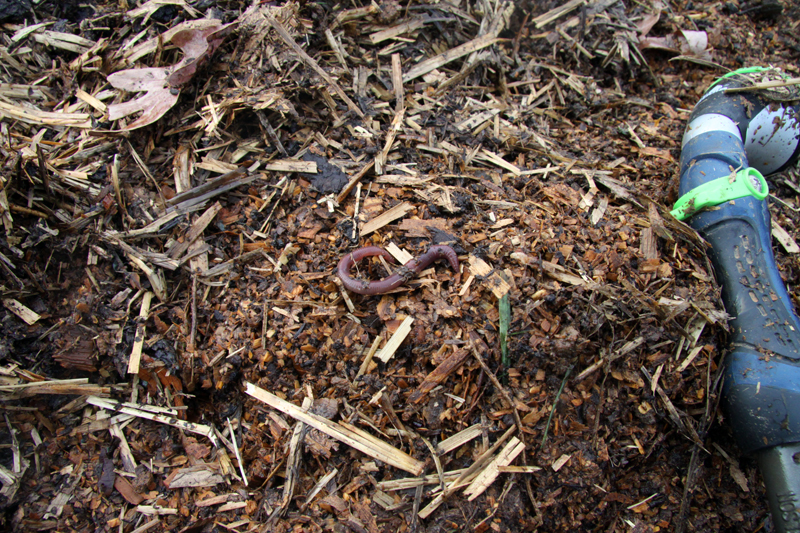
After the cardboard went down, I trekked into the woods to raid the pile of soiled guinea house bedding.

I found lots of nice worms in this material—no doubt because I recently released my “house worms,” which I’d kept in worm bins for the last four years, here.
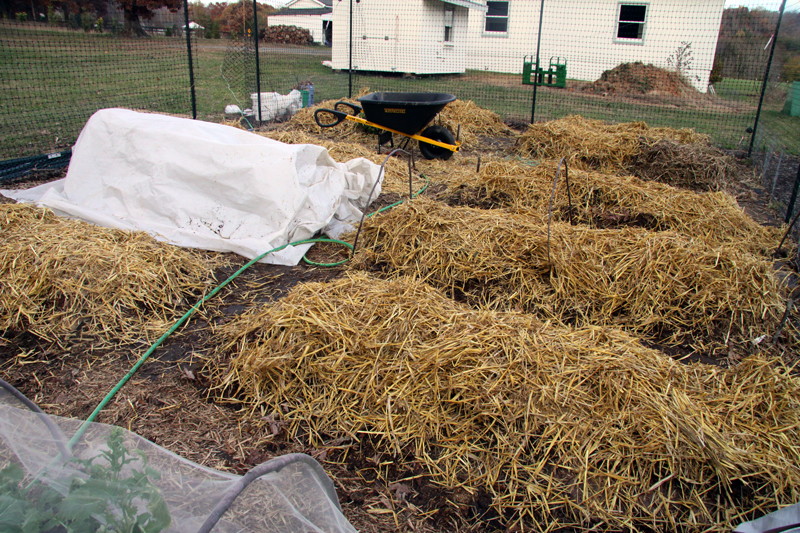
That layer was followed by a good 8″-12″ of straw.
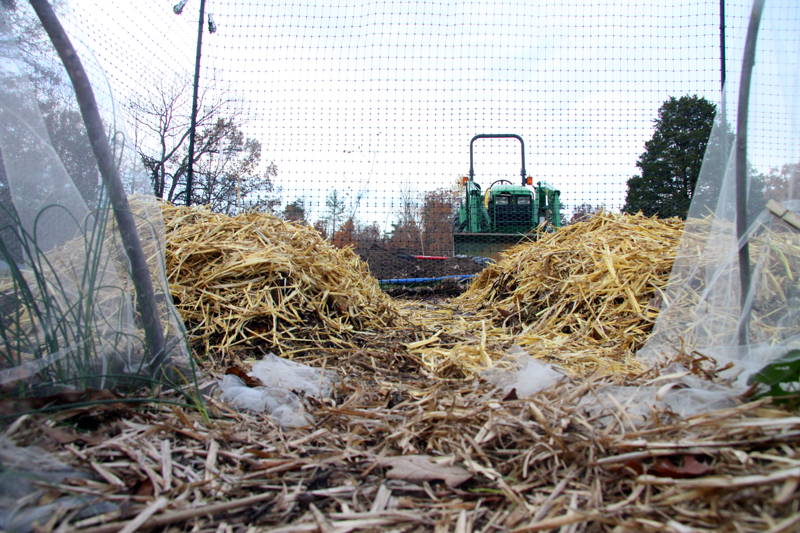
With this addition my beds were definitely what you’d call “raised!”
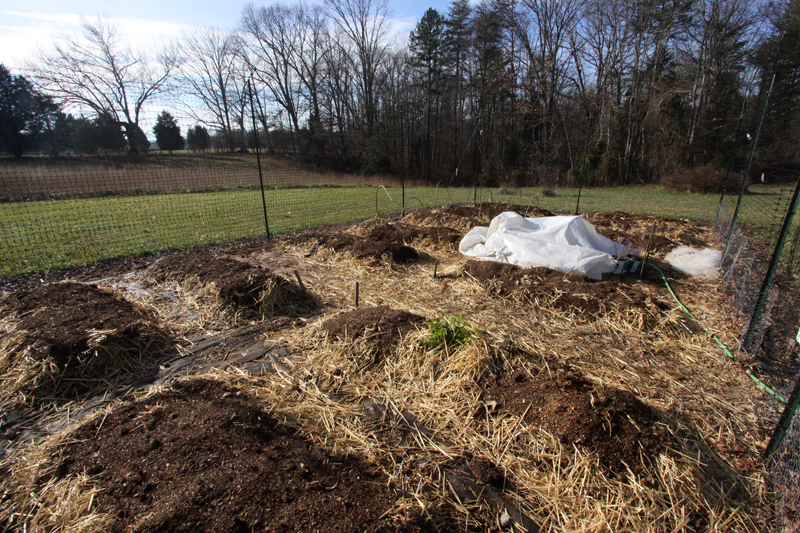
Finally I applied a thin layer of compost on top of the straw, mainly to hold it in place and to help seal in moisture. I also went ahead and mulched under two beds of winter greens, but not before I harvested the last kale and bok choy. I left only one bed untreated—figuring it will provide an interesting control!
And so with some gift compost, old boxes, and a couple of bales of straw—along with several weekends of nonstop shoveling and wheelbarrowing—I’m left with an overuse injury in my elbow and what looks like a graveyard in my pasture.
The best part is that now all I have to do is let the garden sit for the next five months while the worms and bacteria and microorganisms do their good work. Come April, I hope to be sowing spring greens in rich hummus.
I’ll report back next spring and let you know how my first sheet mulch performed!
December 6th, 2011 § 2
Since late October I’ve been working on putting the garden to bed for winter. As I started to explain in this post, in year’s past I just ripped out the frost-blackened vegetation and made sure there was a thick layer of straw on the ground before abandoning the garden over winter. That worked well, but with this new garden I wanted to try harder. I also sensed that my soil fertility might be low. I know that soil is something that’s built over time, but I believe that some of the trouble I had with insects could be resolved by improving soil fertility, which leads to more resilient plants that are better able to defend themselves. Enter sheet mulching.
I’d read about sheet mulching in Gaia’s Garden, what some consider to be the Bible of permaculture, and which I found to be one of the best books I’ve read on gardening. I came to the conclusion that sheet mulching is basically creating the optimal home for worms to set up housekeeping, and as a big fan of the power of worms for improving soil, I was sold.
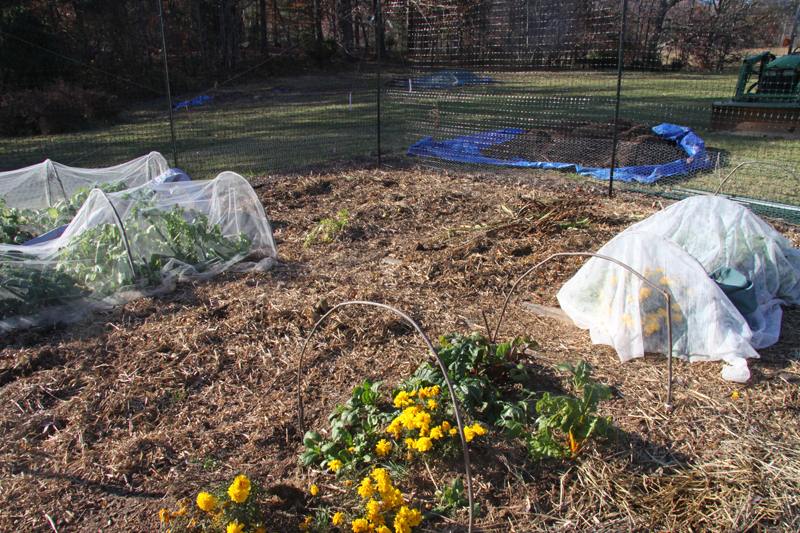
First I pulled out the really big, tough dead plants—the tomatoes and the toughest parts of the dead dahlias. I cut the rest of the lightweight vegetation to the ground and left it lying in the beds for a layer of nice, nitrogen-rich greens. I still had three beds producing winter greens and salad lettuce under row covers and plastic, so I left those standing.
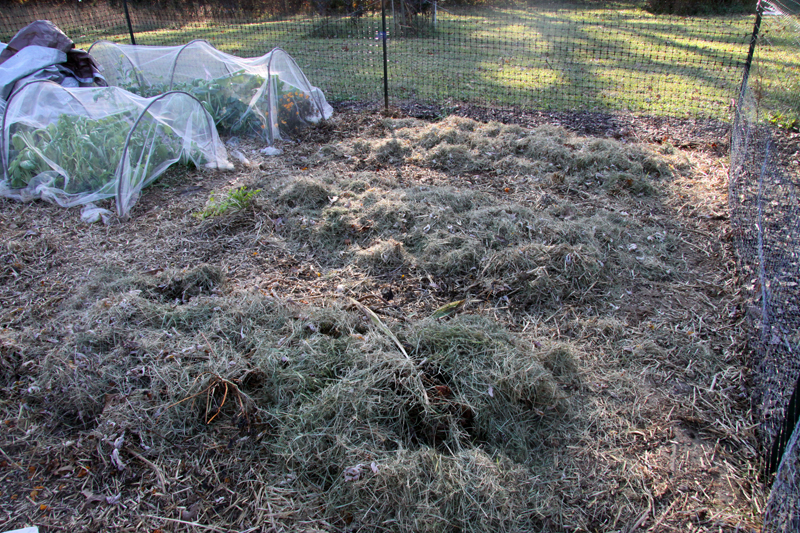
Next came even more high-nitrogen material—first a nice scattering of blood meal, much to the delight of the dog who was helping me assemble my sheet mulch, and then I added a thin layer of grass clippings I raked out of the field.
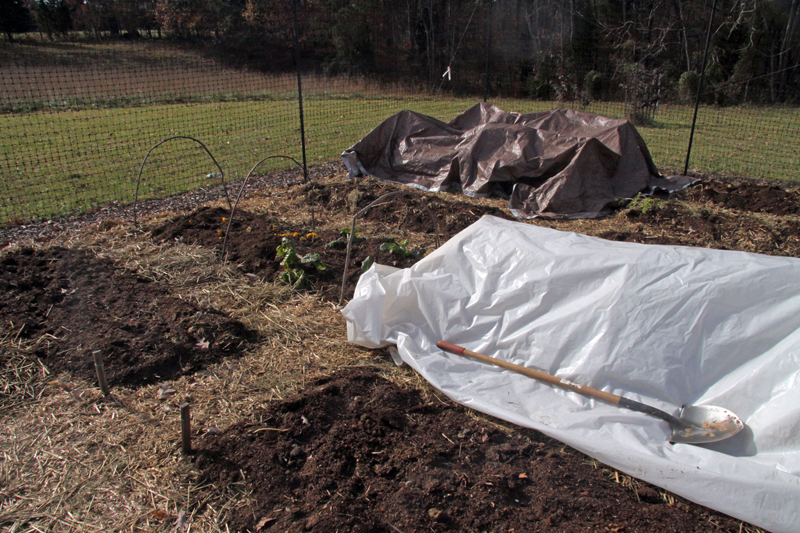
Then I shoveled on a thick layer of well-rotten horse manure compost, delivered by my dad from his private stash.
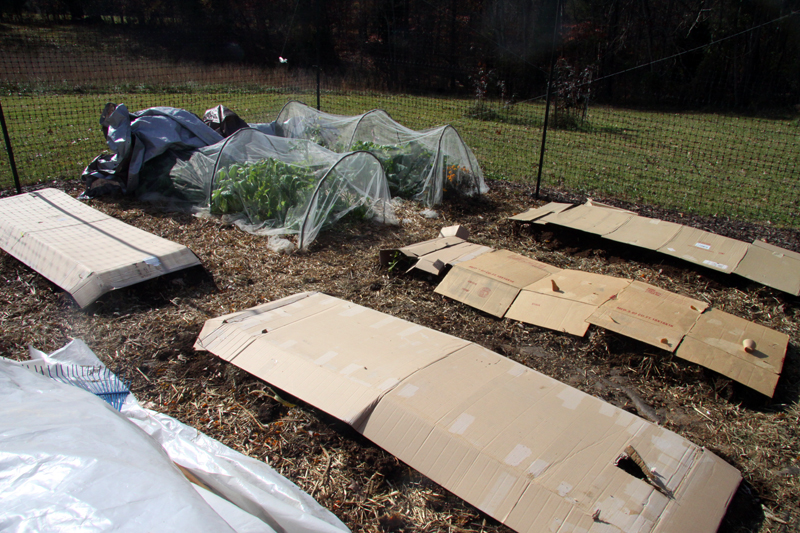
Finally it was time for the fun part: adding the cardboard boxes. If one were sheet mulching over existing turf, the boxes would form a light-impenetrable barrier that would smother all existing vegetation. I was working with already-prepared beds so I wondered if this was necessary. But then I remembered how much the worms I kept in worm bins loved cardboard—and my herbalism teacher mentioned that worms are attracted to tasty sugars in the cardboard and work their way through all the layers of sheet much to get to the banquet—and by doing so create rich soil.
So down went the boxes, some of which I’d had for almost ten years and that had seen me through cross-country moves. In the small apartments I lived in before moving here I’d kept these boxes stashed under my bed, always ready for the next move that undoubtedly was just a couple of years away. There was something so sweet about finally retiring these boxes and using them to build the future of the food for this home.
Another important tip for sheet mulching—lots of water. Each layer needs to be soaked with water so that the worms are well-plumped and everything gets nice and rottey and just right for decomposition.
Stay tuned for the finished project later this week…
November 24th, 2011 § 2
Where these guineas are happy they’re not on the menu.
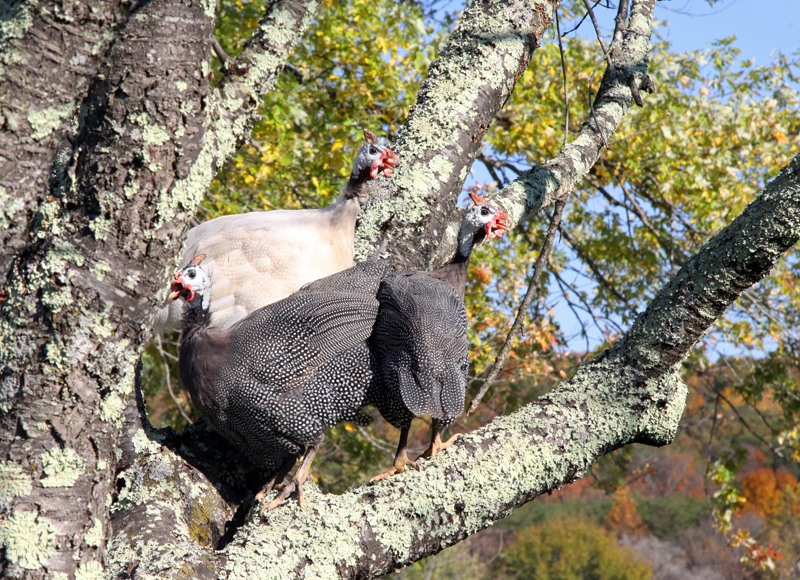
Yet.
November 21st, 2011 § 0
But if this little woolly woodpile hitchhiker’s coloration is any clue, we may be in for a mild winter.
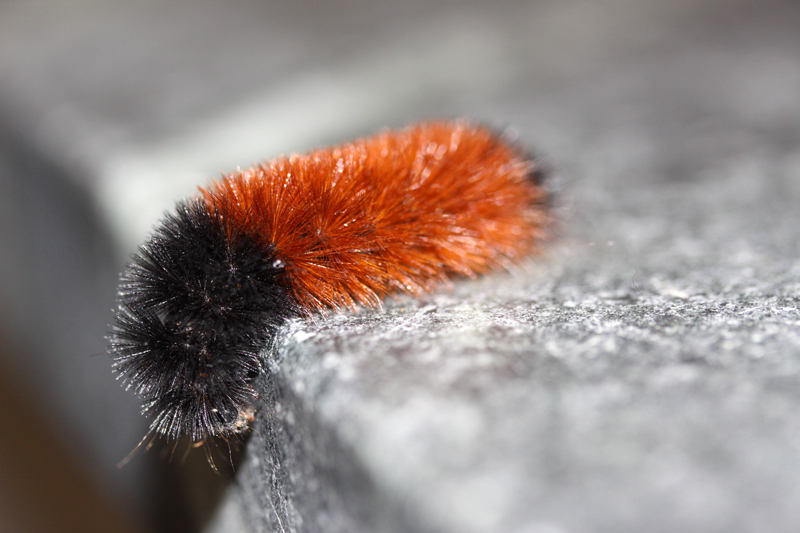
Which would be just fine with me!
November 16th, 2011 § 1
The recent hard freezes signaled to me that it was time to put the garden to bed for the winter. In gardens past, specifically the community garden plot I tended in Arlington, Va., I have simply ripped the blackened stalks from the earth and retreated to the comfort of central heating and daydreaming with seed catalogs. However, even when I was doing that I left a thick mulch of straw over the entire garden. After a few years—right around the time I decided to leave the city for the country—I noticed that without hardly trying I’d built an incredibly rich soil thickly inhabited by beneficial earthworms.
Though I acted out of instinct while I was tending that garden, I have since come to know that others, such as the incredible Ruth Stout, tout the benefits of a thick mulch. Watch this video and you’ll see the woman who’s influenced my approach to my garden, both physically and philosophically, as well as the woman I hope to be in 50 years. Actually, I pretty much aspire to be her right now. Particularly when it comes to the Roman couch breakfast.
If you’re really in to it, she continues:
This post started out as my explanation of the sheet mulching I undertook last weekend, but while writing I grew too re-enamored of Ruth to even go there. So I will stop and pay attention to this inspiration. I hope that you will enjoy these videos, for this woman has much to say.
And some day, while working in my garden, I may make the cars stop on Free Union Road.
November 10th, 2011 § 1
I’ve lived here for a year and a half and have just now gotten around to finishing the front porch ceiling. Up until this Wednesday, it was still raw tongue and groove pine. Now it’s got a lovely clear wood finish on it that has deepened and enriched the natural color of the wood—exactly what I wanted but was unsure of how to accomplish.
My accommodating painter got me over the hump of making up my mind. He painted up a great sample board with six different wood finishes and I held my breath and picked one.
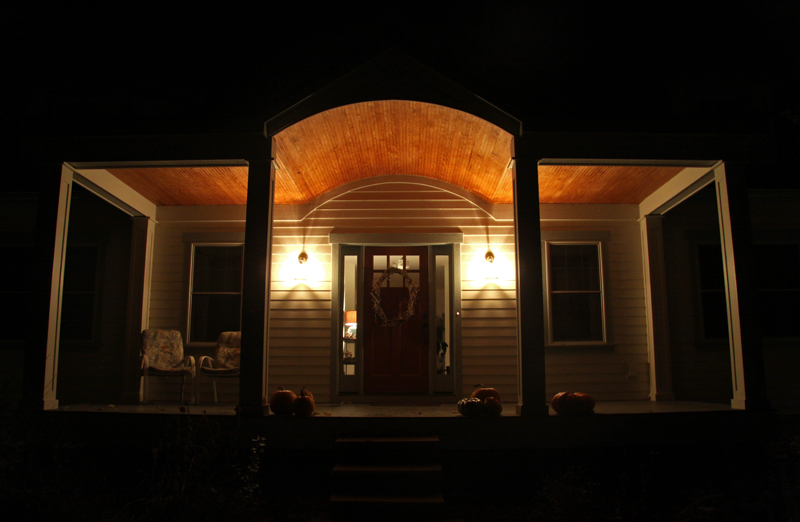
And I am stoked with the result. At night the porch ceiling glows and looks faintly nautical—like part of a beautiful wooden boat. Daylight pictures to come…
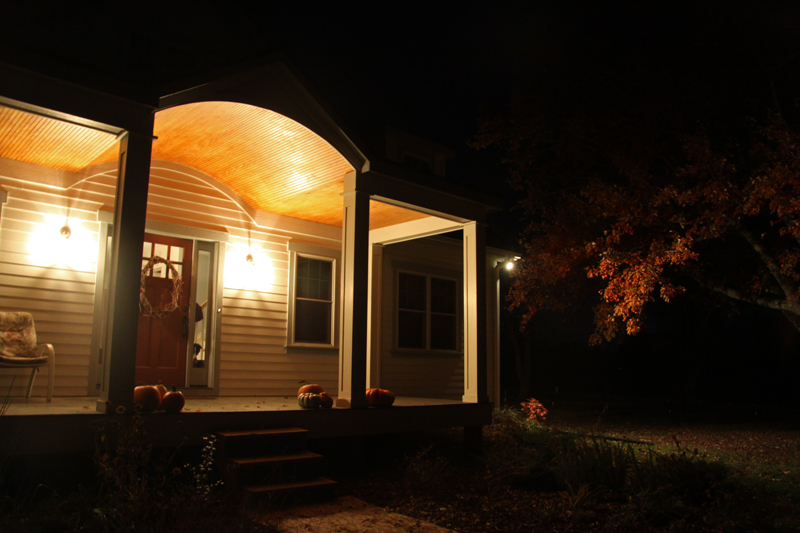
And I can cross one more project—and design decision—off my list.
November 1st, 2011 § 0
Here’s a hint:
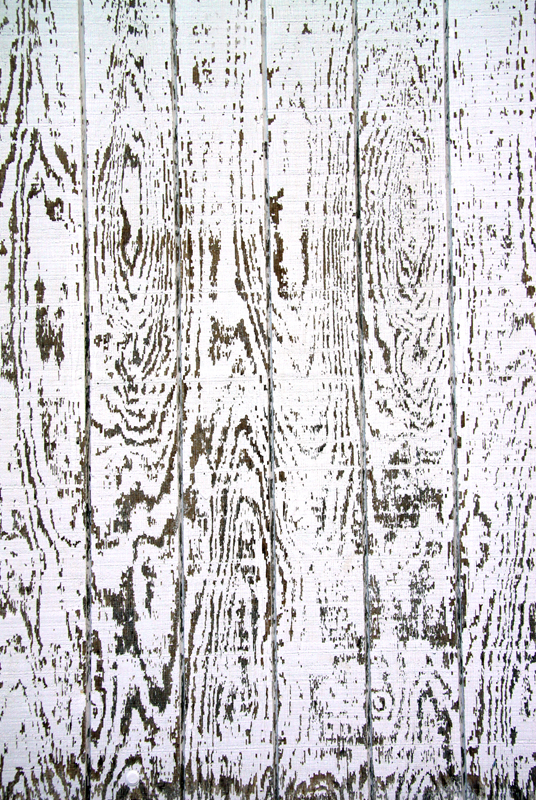
And man, what an indulgence to publish such a journalistically inept headline! All those sensationalist exclamation points, the hyperbole, and my favorite—the weak “update,” which belies semantic laziness.
My old editors are probably cringing at how low I’ve sunk now that I am alone out here in the country with no one to hold me accountable for decent reporting.
How I miss having anyone around who would call me out on this crap.
October 31st, 2011 § 3
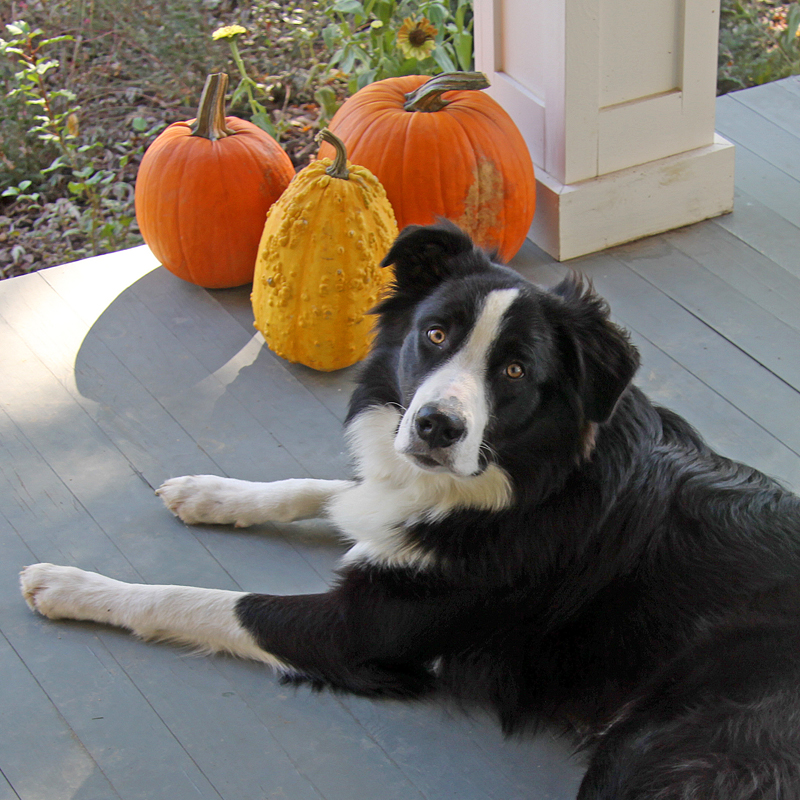
Tucker has no idea how close he came to being dressed as a spotted cow for Halloween. But his still-unbroken dignity stopped me from inflicting that humiliation upon him, even though I was sorely tempted.
There’s always next year.