
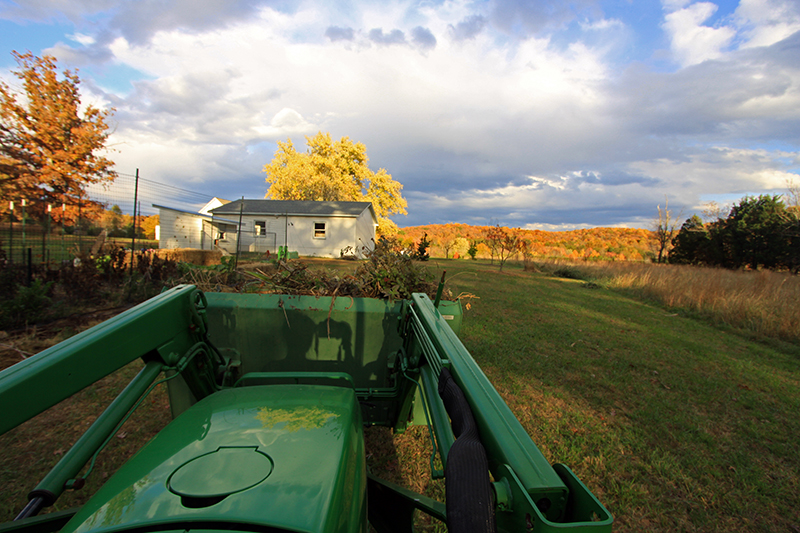
Fall cleanup in the vegetable garden: Part two
November 4th, 2013 § 0
Sunday morning dawned just a beautifully as Saturday, though it was cooler and substantially more windy. After lunch I headed outside to keep working at the vegetable garden cleanup. Unfortunately I had overdone it the day before and reactivated an old injury, a muscle spasm in my upper back next to my shoulder blade. In addition to being constantly uncomfortable, it makes turning my head to the right, such as when backing up the car, downright painful. Farming. Let me count the ways it hurts.
Regardless of any physical discomfort, the garden still needed more attention. First I dug out a couple dozen dahlia tubers for winter storage in the garage. I was amazed at the size of most of these tubers—just gigantic. Seeing this, I am suspicious that something caused this year’s dahlias to put their energy into making tubers instead of into flowers. More research on my theory to come.
I moved the dahlias’ labels, which are attached with twist-ties, from the wire support cages directly to the tubers to keep them properly labeled.
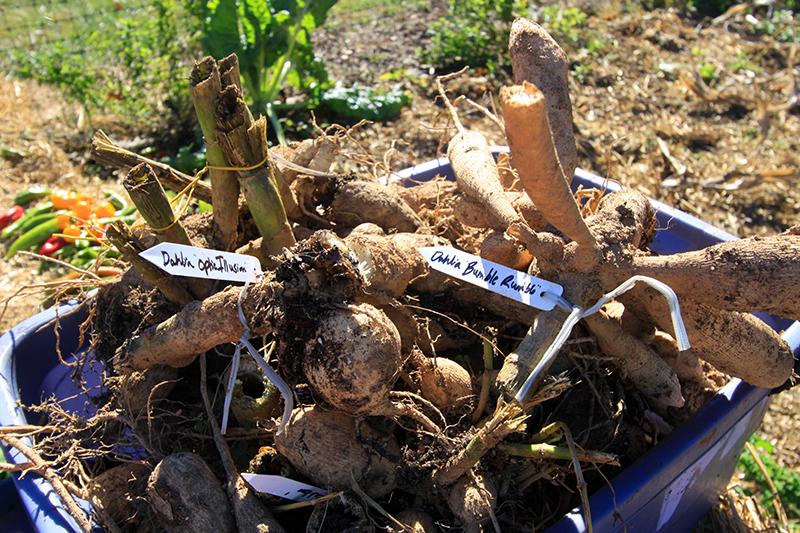
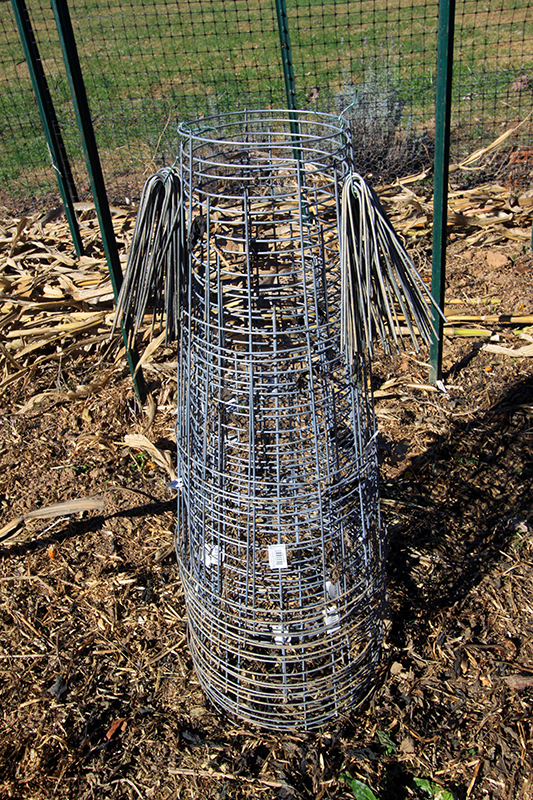
I stacked the custom-made cages and wired their ground pins to them for safekeeping. When I get around to it I will layer the tubers in boxes of peat to keep them from either drying out or rotting during winter. Last year I hung the tubers in mesh bags in the garage and lost some of them to drying out, so I will try a different technique this year.
Then I had to figure out what to do with the Glass Gem corn stalks. I tried digging one stalk out, but the root ball that came with it was so massive and full of soil and beneficial worms that I realized I’d be transplanting most of my hard-won, improved garden soil directly into the woods if I chose that route. So I decided to chop each stalk off at the ground and hope that the root balls would just decompose and continue to feed the soil without the major disturbance of digging. We’ll see. I figured that come next spring, anything I’d want to plant in this area can be tucked amongst any stalks or root balls that may be left over.
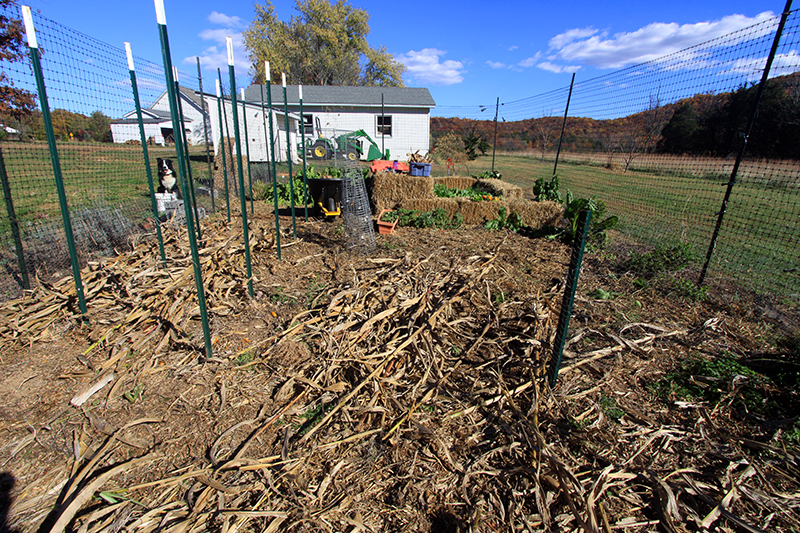
I am undecided about what to do with the stalks. I am heading toward leaving them on the ground over the garden. They will form a nice mulch layer to protect the soil below during winter, and if they’re still around in the spring they’ll be easy to pick up and remove to the compost pile. I plan on putting down a layer of compost then heavily mulching with straw anyway, so these corn stalks perform much the same function and help stretch the straw budget.
I still need to get the tomato stakes out, and then the next step involves shoveling compost into the garden and spreading straw. But as I was not in great compost-shoveling condition with this muscle knot, once I got the dahlias up and the corn down I quit garden cleanup and headed to town for an hour and half of vigorous vinyasa yoga in a warm studio, followed by liberal application of the gym’s hot tub jets to my back muscles.
Fall cleanup in the vegetable garden: Part one
November 3rd, 2013 § 0
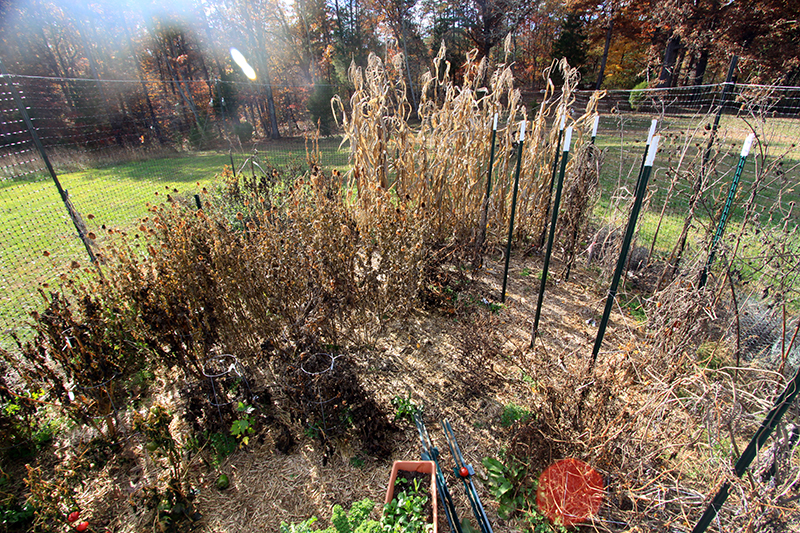
Anytime after the first freeze of fall I am on the lookout for a few days of nice weather in order to put the garden to bed. This weekend was perfect for the job, with temperatures in the 60s, bright blue skies and sun streaming through the red, orange and yellow trees. Such glorious weather is, I suppose, a small consolation for what is one of my saddest markers of seasonal change. Take a look at this pathetic sight:
I started with the tomatoes, cutting them down from their stakes.
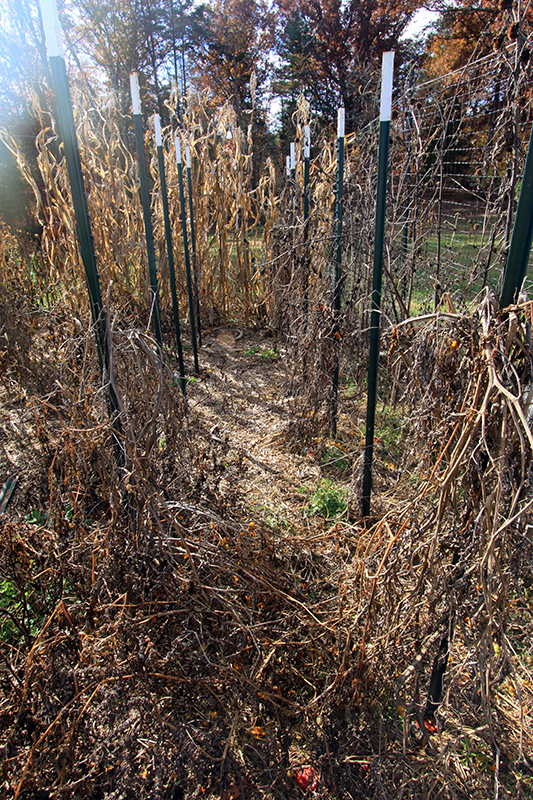
I always use cotton or jute twine to stake my tomatoes so that at the end of the season everything can go right in the compost, which beats having to pick pieces of plastic or wire out of the jumbled vines. I wasn’t too meticulous with picking up the dropped fruit as I plan on running the chickens in here during winter and they will appreciate the treats.
Then I moved on to ripping up the cosmos and zinnias, and as I did I saved seed heads from varieties that did particularly well. I plan to scatter these seeds over some bare spots in hope of starting a wildflower patch.

Then I cut the hyacinth bean vines off of the deer fence. A tedious job, indeed, to avoid cutting the plastic fence. Next year I will sow my hyacinth bean up the sides of the metal chicken run. Finally I pulled the frozen peppers out. I was annoyed at myself to find that there were so many peppers that I hadn’t harvested before it was too late. This is what happens when the first frost happens when the farmer is out of town for a couple of days!

Then I took a break from the vegetable garden to walk through the pastures, cutting out the prickly shrubs that are the first woody plants to initiate reforestation of cleared areas. It took several big tractor bucket loads to get everything to the compost and brush piles in the woods.
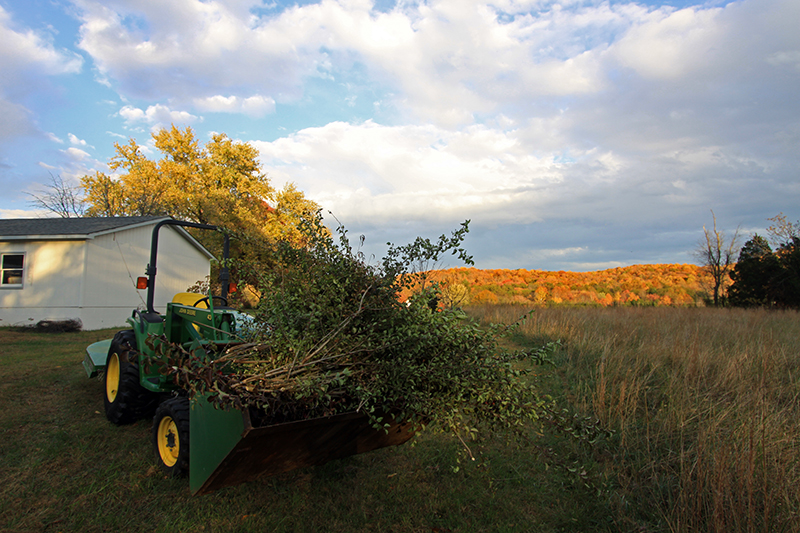
By then the sun was setting and I had been working outside for more than seven hours in a row. So when the chickens headed into roost, I did the same, straight for a hot epsom salt bath. Up next: day two of vegetable garden cleanup.
Beautiful bug: Praying mantis
November 2nd, 2013 § 1
I had a very intense encounter with an insect today. I was cleaning up the front garden when I looked down and saw a bright green praying mantis at the base of the porch. It was clutching an identifiable insect, and I had obviously disturbed its head-first meal.
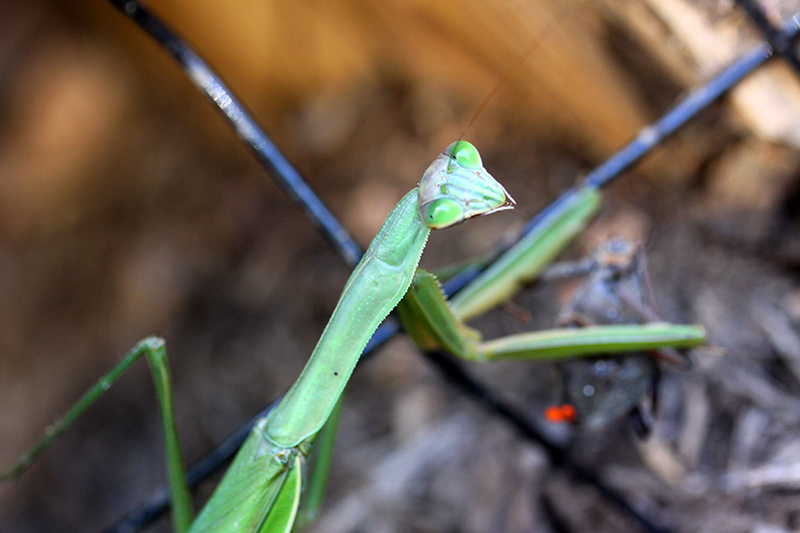
The mantis watched my every move, swiveling its triangle head to stare at me with all-seeing eyes. I’ve experienced this before with mantises, but this time the mantis began to move exactly like a mammal. It tucked its bug under its arm like a football and carried it deeper under the porch, eyes on me the entire time. I had the eerie sensation of watching a wolf drag a deer haunch deeper into a cave. This insect had caught a meal, and there was nothing I could do that would scare it from abandoning food.
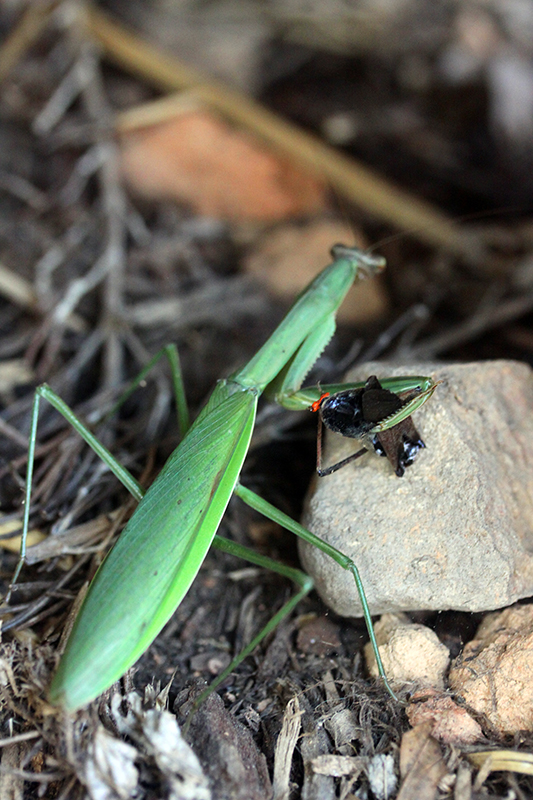
I am so used to being around easily frightened birds and insects and even large mammals, all of which usually drop whatever they’re doing in my presence, that the deliberateness with which this mantis protected its quarry while strategically repositioning was nothing short of astonishing. The intelligence of its deliberate movement gave me chills.
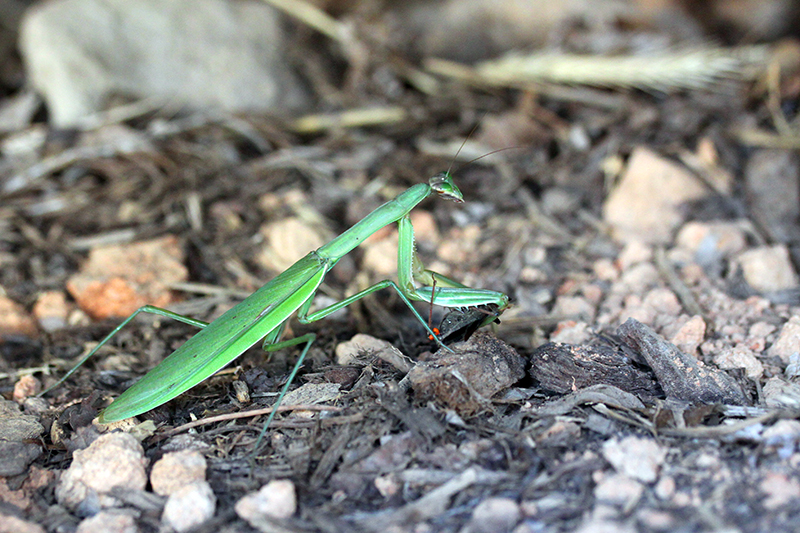
And I was happy to for it to go on its well-fed way. Praying mantises are treated as gods around here for the benefits they bestow upon the garden by eating all sorts of insect pests. I’ve gone so far as to clip mantis egg cases from shrubs in the about-to-be-bushogged field, only to relocate them to a safe place in the garden. And today, after seeing this mantis off, I found a mantis egg case in the mint patch by the garden. Every scraggly stem, but for the one that bore this egg case, was clipped and carted to the compost pile.
Daily commute: Peak fall color
November 1st, 2013 § 2
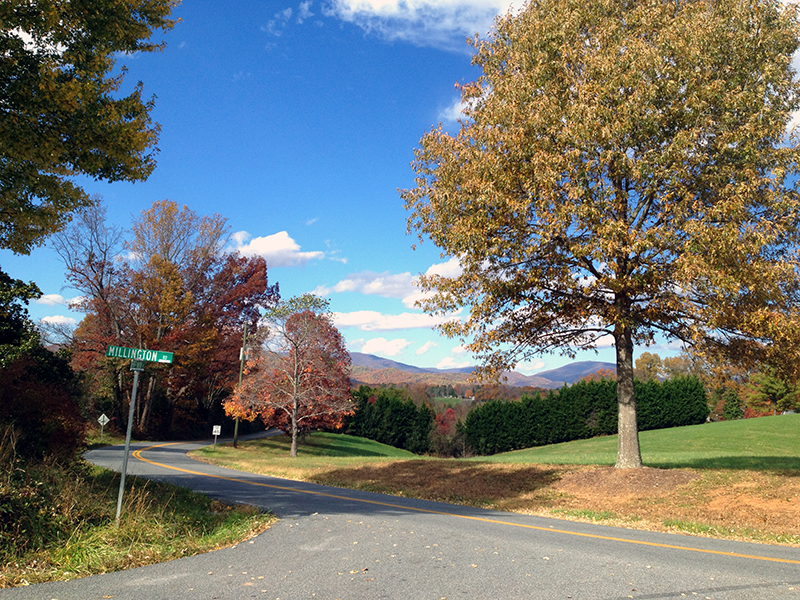
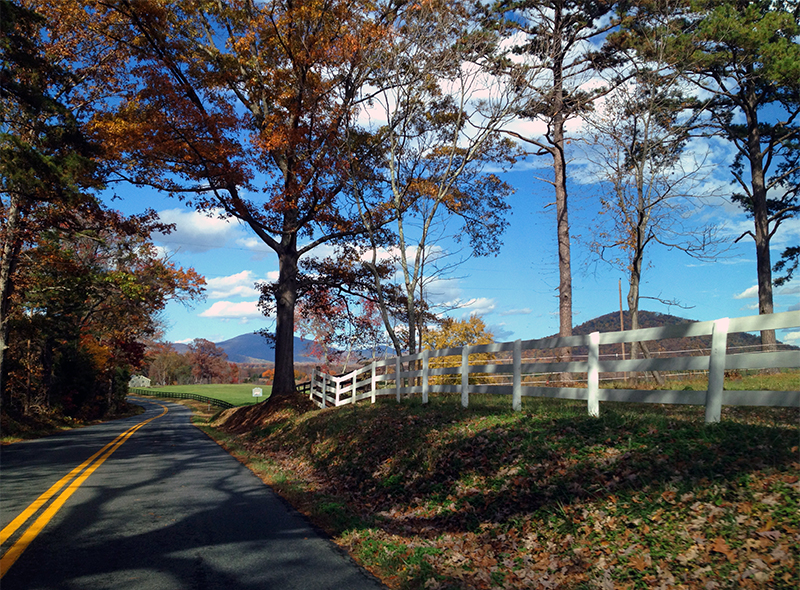
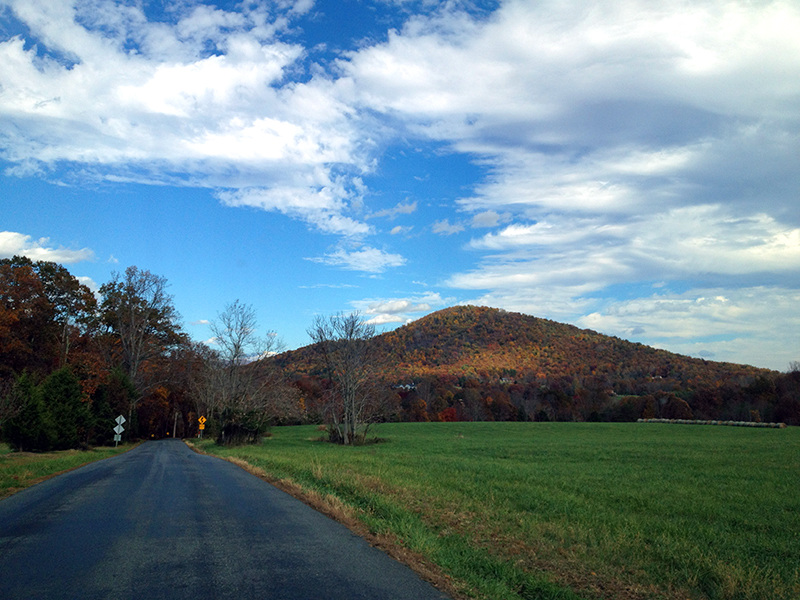
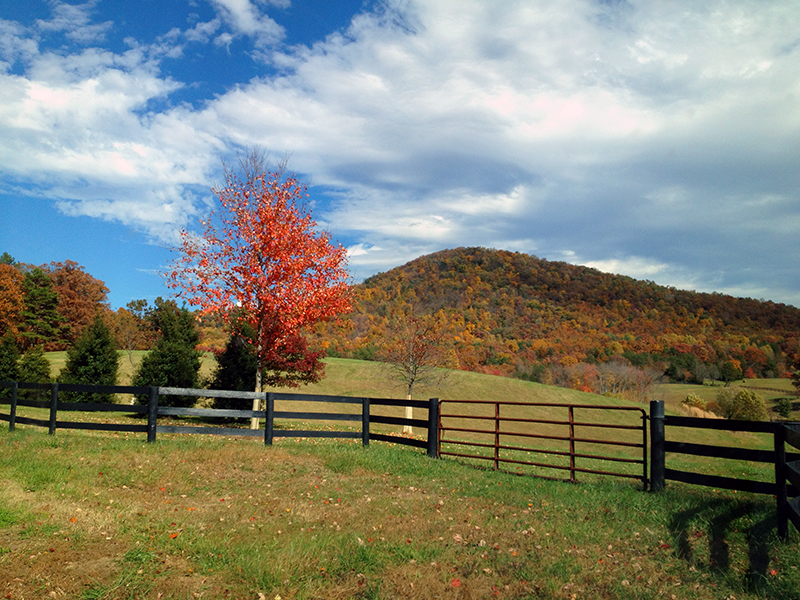
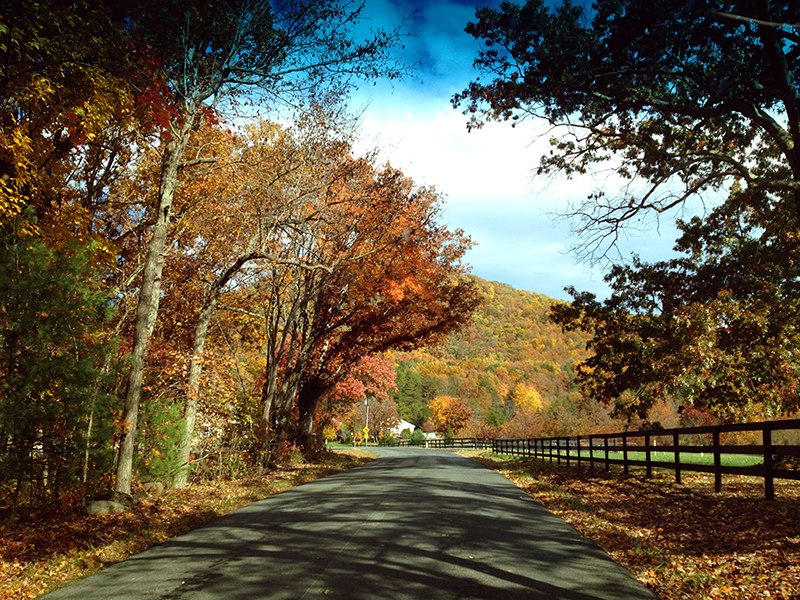
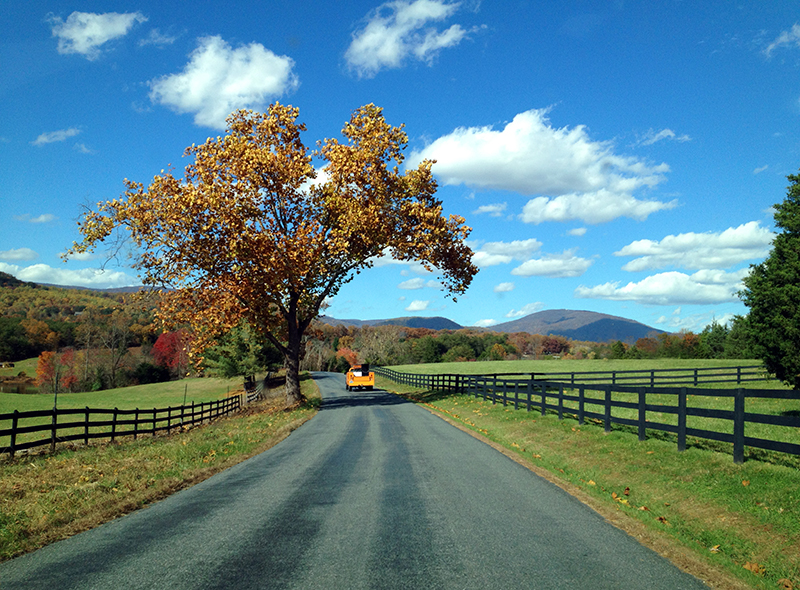
I’m going to go ahead and call today as peak fall color. I’ve been watching the leaves as they’ve turned, and though they’ve been pretty for weeks, today they became spectacular. Sometimes I lament living 25 minutes from town, but on days like today, I pinch myself in disbelief that I get to live here. I can’t make the drive last long enough as I struggle to keep the car on the road while snapping iPhone photos out the window. Here’s a taste of what I saw while driving home today:


It’s all over, folks
October 26th, 2013 § 2
The 2013 growing season came to an end last night with the first freeze of the fall. When I woke up this morning, it was 26 degrees and the ground was covered in thick white frost. 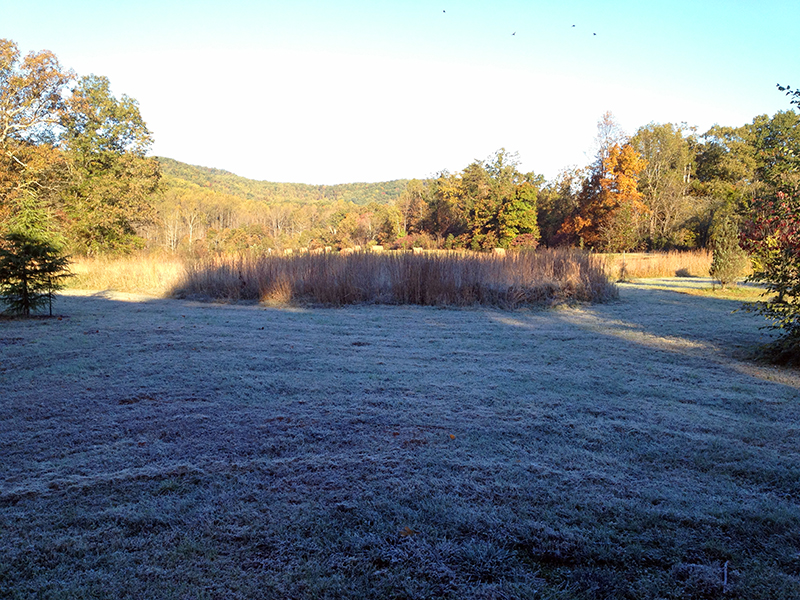
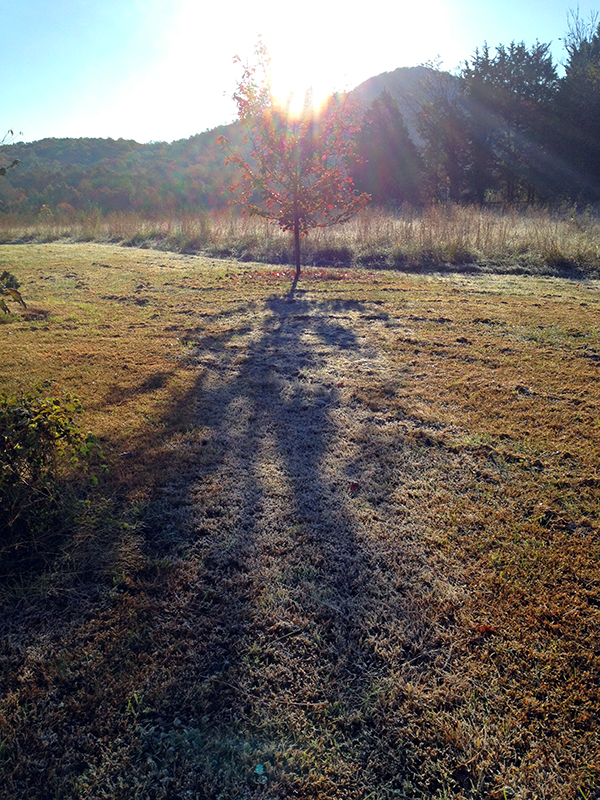
A brisk walk around the farm revealed blackened and sagging flowers, mottled and falling leaves, and the last of the garden peppers reduced to mush inside skin. It is always, for me, the saddest morning of the year. It means no more digging in the dirt and no more daily joy watching my labor become food and flowers. Now all that’s left to do is tear out the dead plants and drag them to the compost pile.
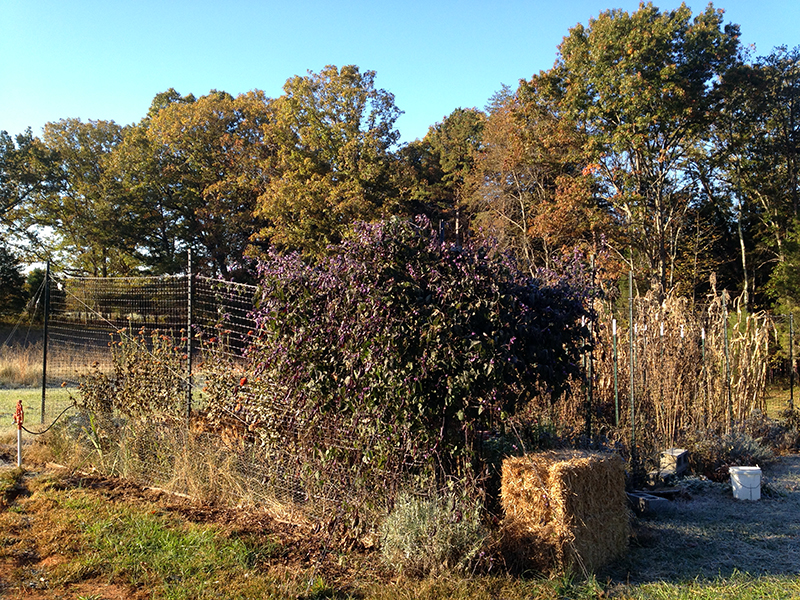
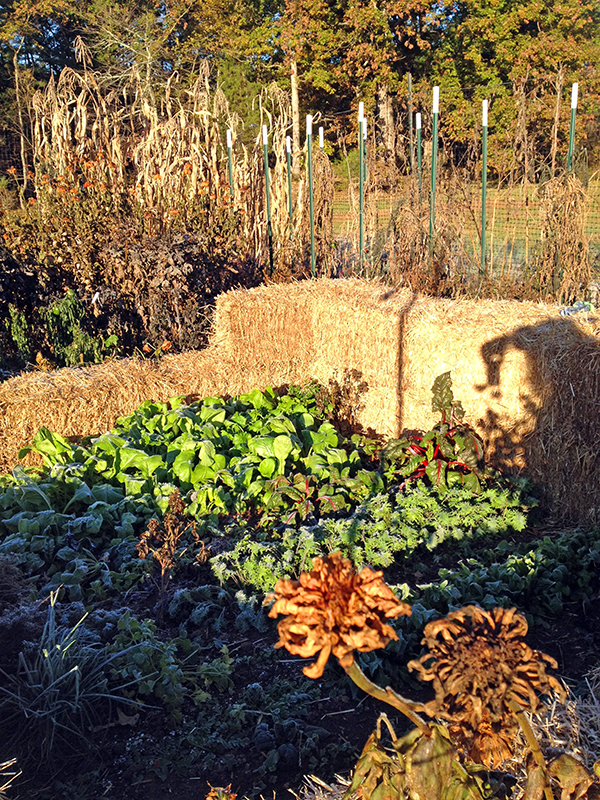
I suppose the only saving grace of this inevitable transition is that it’s now woodstove season. I made my first fire this morning to warm up a 50-degree house. I hadn’t turned my heat on yet this fall, and now it’s up to Jotul to beat back the chill. The stove started right up, drew perfectly, and seems so happy to be back to work and the center of attention. It is the warm white heart of this home.
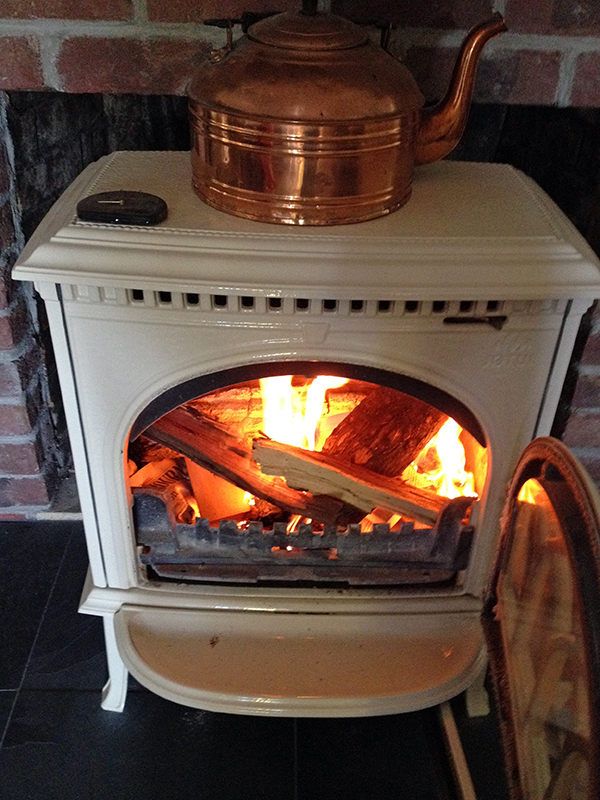
I’ll be back soon with the 2013 garden success and failure post, as well as more info on all sorts of projects that I didn’t get a chance to write about during the busyness of summer. But now it’s time to go put another log on the fire.
October morning light
October 18th, 2013 § 0
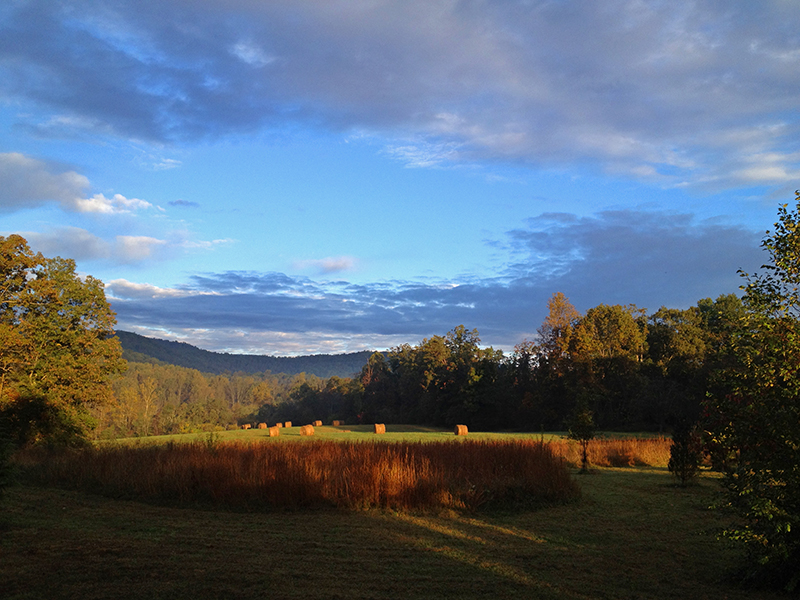
It’s the time of the year when the sky and lowering angle of the sun start to do very interesting things with light and shadows. The leaves are not yet turning en masse, but it won’t be but another week or so before the mountains are red and gold. Fall. I hope you’re out and enjoying it in your favorite way.
Beautiful bugs: Monarch butterfly
October 16th, 2013 § 0
I found this lone monarch feasting amongst the zinnas last week. Given all the trouble monarchs are in, I was very happy to see it and to know I’d done my part to cultivate a delicious banquet of nectar-rich flowers. I wonder if this butterfly was refueling on its migration to Mexico?
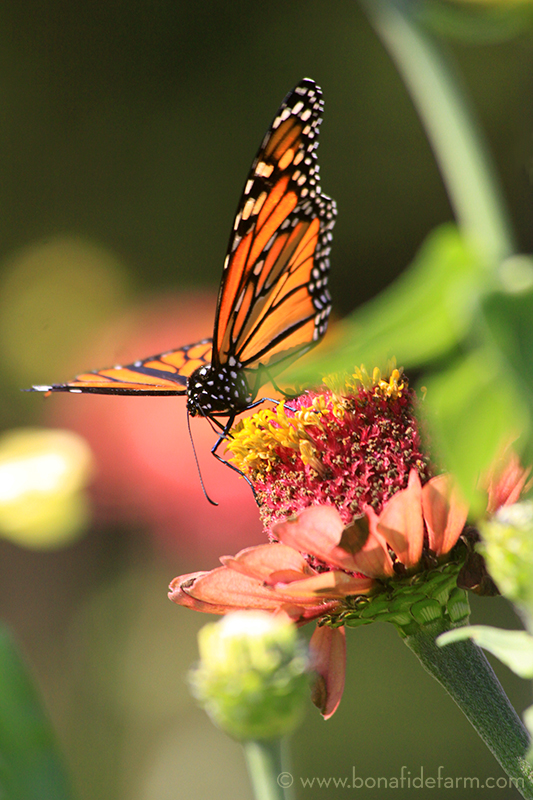
Monarch butterflies are decreasing at an alarming rate: 59% in the last year according to a survey carried out during the 2012-2013 winter season by the WWF-Telcel Alliance, and Mexico’s National Commission of Protected Areas (CONAP). The numbers of monarchs are at their lowest numbers in 20 years. According to the same organization:
The latest decrease in monarch butterflies is likely due to a decrease in the milkweed plant (Asclepias) – a primary food for monarchs – from herbicide use in the butterfly’s reproductive and feeding grounds in the US, as well as extreme climate variations during the fall and summer affecting butterfly reproduction.
Why should you care if monarch numbers are decreasing? Because monarchs, like all insects, are pollinators. In simplest terms, without pollinators we won’t have any of the foods that require pollination, no fruits or vegetables, and these are the healthiest foods we can eat. And even a food that doesn’t appear to be a vegetable, such as bread, starts life as a plant that probably needs to be pollinated.
So if we want to keep eating, we have to cultivate what pollinators need to thrive and eliminate the use of what’s killing them—pesticides and herbicides. In the case of the monarch, their most important food is milkweed. There are some native milkweeds in this area, and one of the reasons I don’t mow some of my fields is to let these “weeds” flower to feed the monarchs. Even so, these butterflies need more milkweed. It’s one of my goals to some day make a formal monarch garden, rich with milkweeds, to try to encourage monarchs to breed and cocoon right here.
If you’ve never seen a monarch cocoon in person, it’s worth planting a butterfly garden just for a chance to spy this treat. The cocoons are the most beautiful color of Jadeite green and are decorated with spots of pure, shining gold. They look like precious jewels. When the monarch is about to hatch, the cocoon turns translucent and you can see the orange and black butterfly folded up inside. When it emerges, it’s all wet, sticky and deflated, and it must sit and slowly pump its wings until its blood inflates them. Truly fascinating and beautiful to watch in person.
For even more on the monarchs, visit monarchwatch.org. And for a scientifically literary take on the monarchs’ plight, read Flight Behavior, by Barbara Kingsolver, one of my most favorite authors.
Get crafty: How to make a ‘Glass Gem’ corn wreath
October 15th, 2013 § 5
After harvesting more than 100 ears of ‘Glass Gem’ corn, I needed to do something with it. A harvest wreath was the perfect project. I love to make wreaths—I love the seasonal symbolism of them and the way they act as jewelry for the house, dressing it up in a way that shows that the person who lives there cares enough to make the public face of their home pretty and welcoming.
However, the wreaths one most often encounters in stores are all too frequently plasticly hideous, reminding me of cheap gravestone decor, while being simultaneously, ironically expensive. It’s very hard to find a good wreath, which in my definition is one that looks natural and fairly understated, while also having enough going on to be interesting. The wreath should also be complementary to the home that it’s decorating.
Because I am picky about wreaths, I tend to make my own each season. I’ve done fall fruit wreaths, winter greens wreaths and spring wildflower wreaths, but I’d never before attempted an Indian corn wreath. It was a bit of a learning curve, but here’s how it all went down.
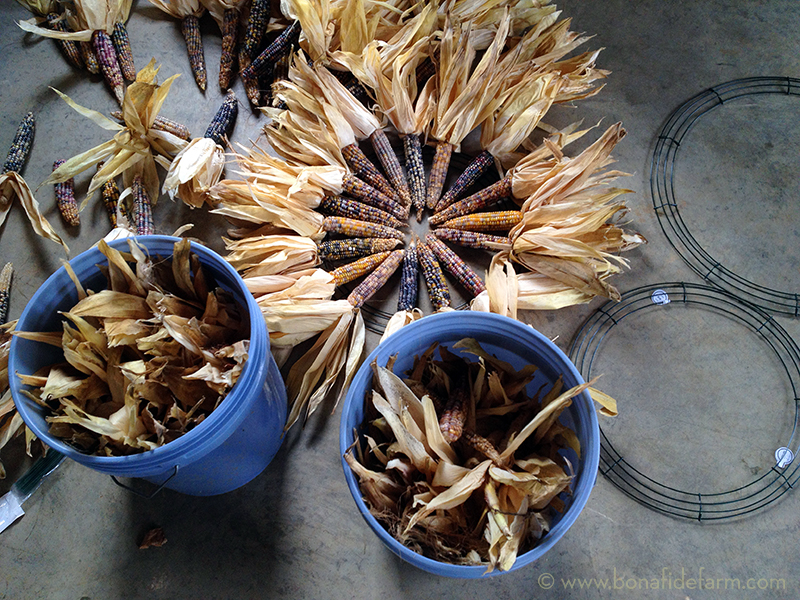
I got a few cheap wire wreath frames, and then I set to work sorting my best-looking ‘Glass Gem’ corn by length into separate buckets. I figured I had enough good corn for two fairly substantial wreaths. Then I did a test fit for the first wreath, choosing the ears for the four cardinal directions and then filling in between them with a nice balance of colors.
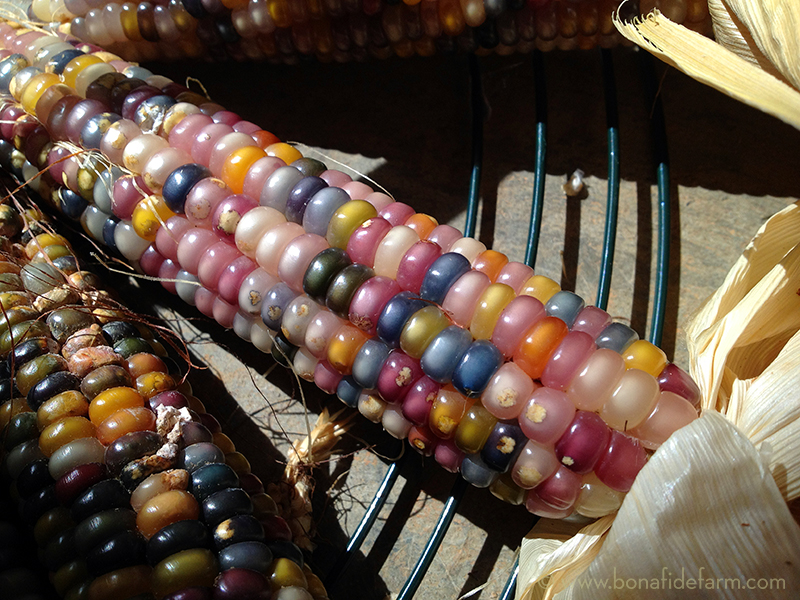
I soon realized that the corn wasn’t thick enough to totally hide the wire frame. I did two things to fix this issue. First, I wired some pieces of rafia sheeting, which were actually cut-up IKEA window screens that I’d had for many years, to the wire base. Second, I folded a few pieces of corn husk back behind each cob, trimming the husk that stuck out past the end of the cob.
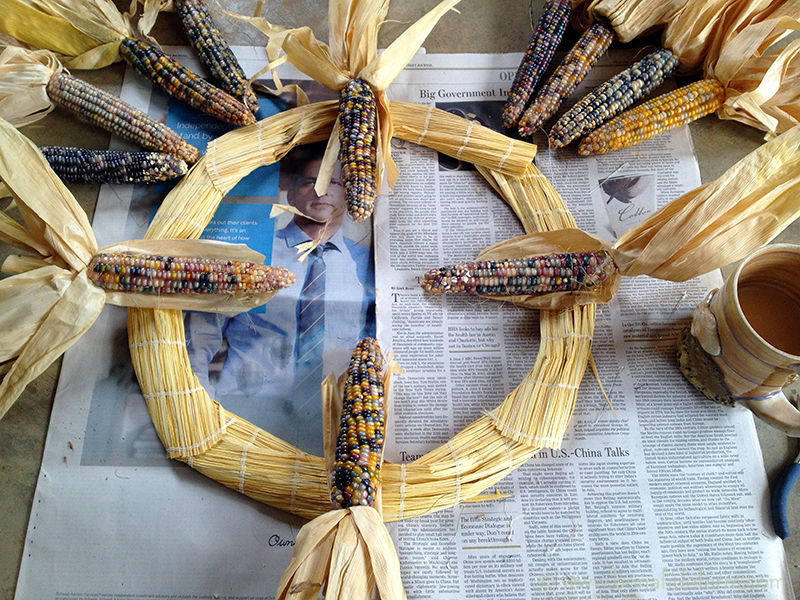
After I hot glued each ear down, they still needed more support to stay on the frame. I had to make two points of connection on each ear to keep them from flopping around or falling off when the wreath was hung. I got a big needle and some very fine gauge wire and sewed each ear onto the frame, going around twice. The silver wire blended in pretty well and wasn’t too noticeable. I tied the wires off in the back of the wreath, leaving them long enough that I could tighten them again should the corn shrink as it dries.
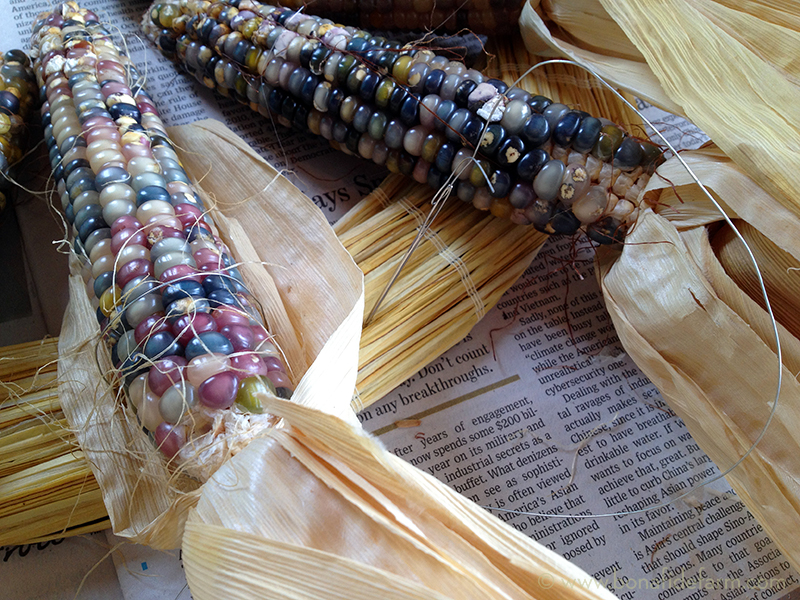
And then I just kept going, glueing and wiring the corn in place, all while sitting on the floor of the garage.
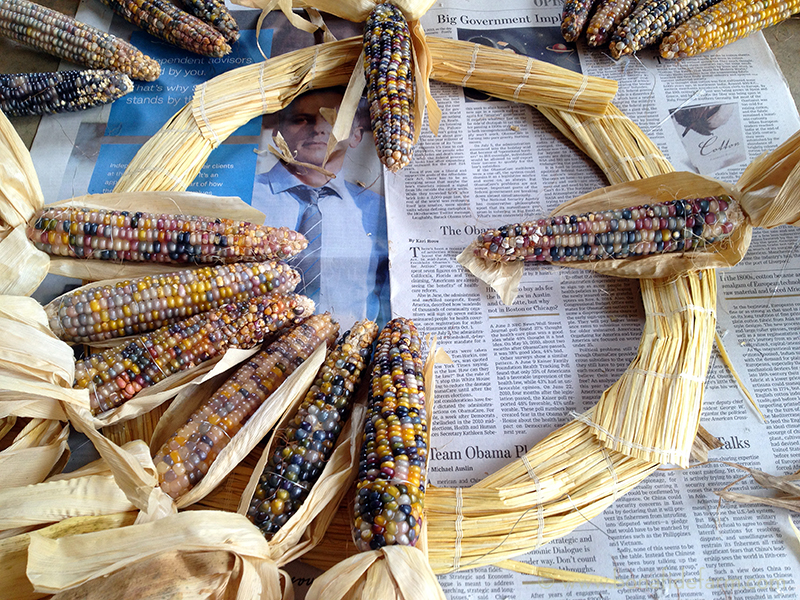
It took a long time to fuss with each piece to make it look nice, but I had lots of company.

In fact, the chickens seemed pretty happy to be snacking on runaway ‘Glass Gem’ corn kernels. What a gourmet treat!
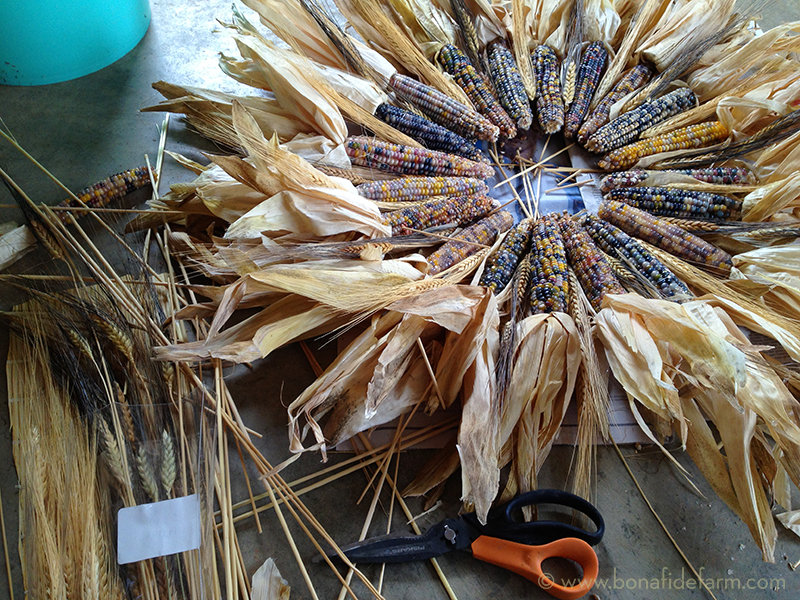
Once I got all the corn cobs attached, I went back and filled in some thin-looking spots with extra corn husk. Some of cobs had lost their husks entirely, so I hot-glued prosthetic husks to them. And then I got some wheat stems (picked up at the craft store) and glued them in between each cob for another layer of interest. I trimmed the tips of some of the cobs with my pruners to help make the negative space in the center of the wreath as even as possible.
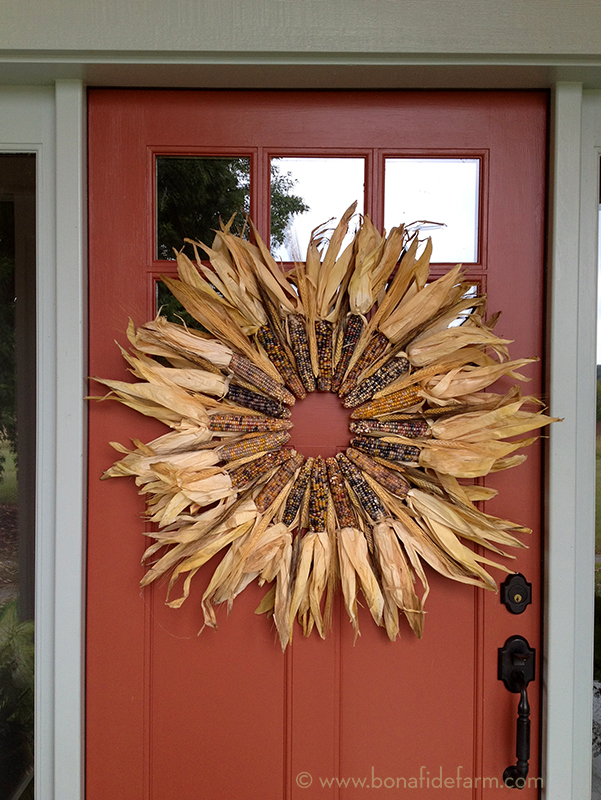
After a test-hang to check for any weird-looking spots, the wreath was ready for the front door. I couldn’t have picked better corn colors to go with my house!
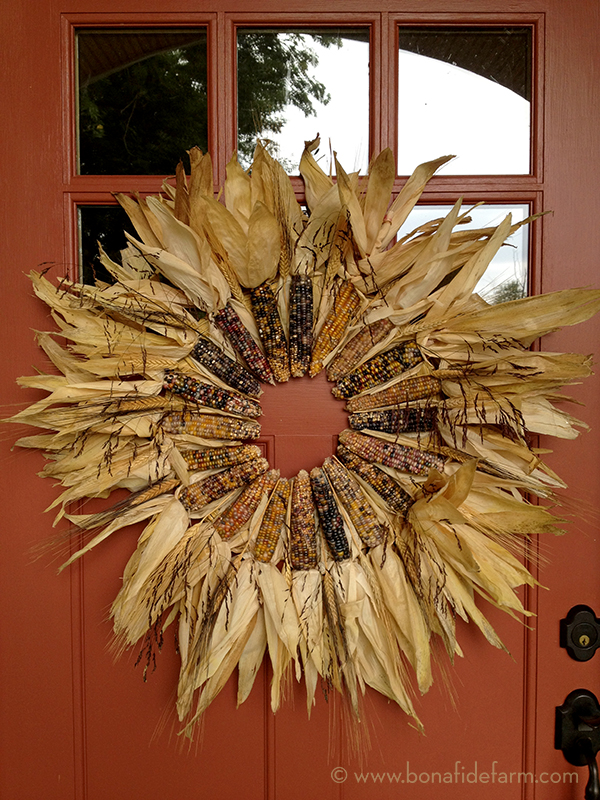
And then I made another for wreath for my mom’s front door. The wreaths have been hanging almost a month and seem to be holding up pretty well. They’re both on protected porches, which I am sure helps to extend their life. But if they should decide to take a turn for the ugly, I know a bunch of chickens that would be pretty thrilled to help dispose of the remnants of my harvest wreath.
October dahlias
October 14th, 2013 § 1
It’s been raining and grey here for about the past week. There are three inches of rain in the gauge, all collected during the last few days. It feels like the sun will never shine again.
So, let’s look at something bright and colorful today. My dahlias are coming into their prime season, mid-October, and the extra rain is making them especially happy. I picked an assortment a few days ago to make a record of how these named varieties performed in my garden.
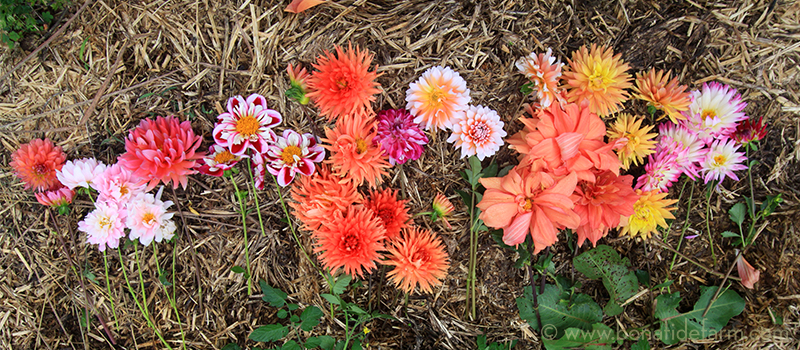

Above, from left to right: ‘Fire Magic,’ pale pink and white ‘Chilson’s Pride,’ Unknown—possibly ‘Fire Magic’ again, the very cool raspberry and white collarette ‘Bumble Rumble’
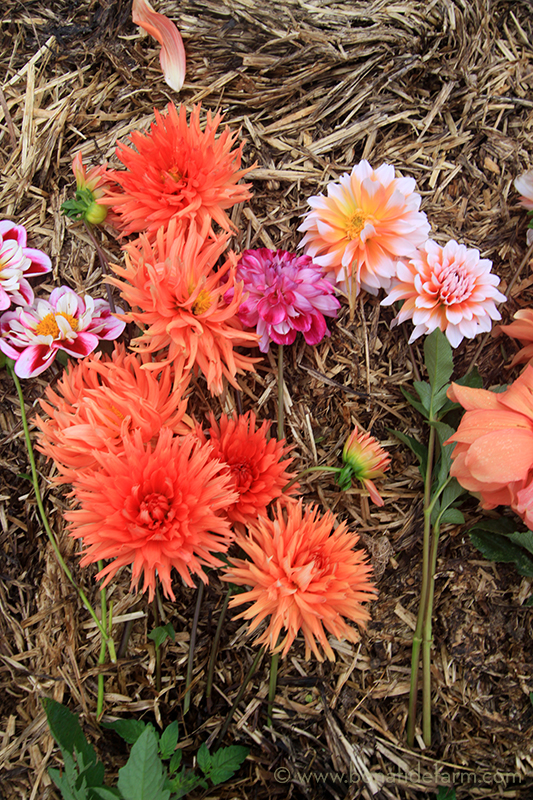
Above, from left to right: ‘Bumble Rumble,’ orange ‘Kabloom,’ purple ‘Optic Illusion,’ orange and white ‘A la Mode’

Above, from left to right: ’A la Mode,’ huge coral ‘Mango Madness,’ unknown yellow and unknown purple and white from hardware store grab bag
‘Kabloom’ has really stood out this year. Not only did it overwinter from last year, it was the first to flower and grew taller than me. Of course I should have pinched it, but I didn’t. Thus, it’s fallen over now but still continues to pump out these spiky orange blooms.
I really love the color, size (11″), and blowsiness of ‘Mango Madness,’ but its blooms are quick to fall apart.
Although all these dahlias are pretty, in general I think the previous two years were better dahlia years. Perhaps dahlias, being native to Mexico, didn’t appreciate our very wet, humid and relatively coolish summer. I had my first case of powdery mildew show up in the dahlias this year. And, I know they were too crowded in the garden. Everything was—that’s what happens when you decide to grow a corn patch and expand the dahlia planting in the same year. Some of my favorite dahlias from year’s past didn’t make it through the winter—their tubers got too dried out and died. So, I missed those this year but one of the most exciting things about growing dahlias is trying new varieties each season.
I am torn about whether to dig up these tubers and overwinter them indoors (properly this time, so as to not lose as many as last year) or let them overwinter in the ground. I suspect that if they stay in the ground they will get growing sooner next spring, but I also run the risk of losing them to the damp and cold. And, if I run the chickens in the garden again this winter, the birds may scratch and peck the tubers into oblivion. I haven’t decided yet—we’ll see. But in the meantime, and for these last few weeks before the first frost, I will be enjoying these bright and favored flowers.